QUICK INFO BOX
| Attribute | Details |
|---|---|
| Full Name | Brett Adcock |
| Nick Name | Brett |
| Profession | AI Startup Founder / CEO / Entrepreneur / Investor |
| Date of Birth | 1986 (exact date not public) |
| Age | ~39-40 years (as of 2026) |
| Birthplace | United States |
| Hometown | Florida, USA |
| Nationality | American |
| Religion | Not publicly disclosed |
| Zodiac Sign | Not publicly disclosed |
| Ethnicity | Caucasian |
| Father | Not publicly disclosed |
| Mother | Not publicly disclosed |
| Siblings | Not publicly disclosed |
| Wife / Partner | Married (details private) |
| Children | Yes (details private) |
| School | Local Florida schools |
| College / University | University of Florida |
| Degree | Finance & Real Estate |
| AI Specialization | Humanoid Robotics / Embodied AI / Autonomous Systems |
| First AI Startup | Archer Aviation (eVTOL) → Figure AI (Humanoids) |
| Current Company | Figure AI |
| Position | Founder & CEO |
| Industry | Artificial Intelligence / Robotics / Deep Tech |
| Known For | Figure 01 & 02 Humanoid Robots / AI Innovation |
| Years Active | 2011–Present |
| Net Worth | Est. $400M–$700M (2026) |
| Annual Income | $50M–$100M+ (equity-based) |
| Major Investments | Figure AI, Archer Aviation, Vettery |
| @brettadcock | |
| Twitter/X | @adcock_brett |
| Brett Adcock |
1. Introduction
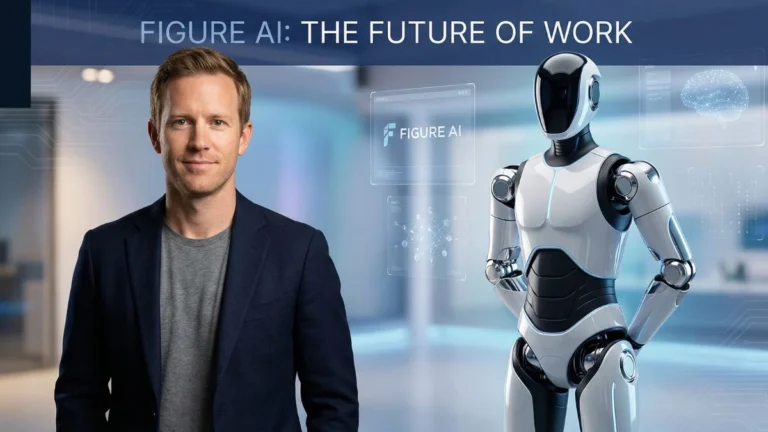
Brett Adcock stands at the forefront of the humanoid robotics revolution, leading Figure AI—one of the most ambitious artificial intelligence ventures of the 2020s. As the founder and CEO of Figure AI, Adcock is building general-purpose humanoid robots designed to work alongside humans in warehouses, manufacturing facilities, and eventually homes. His vision: to solve labor shortages and dangerous work through embodied AI that can navigate human environments.
Before robotics, Adcock made his mark as a serial entrepreneur, founding Vettery (acquired by Adecco for $100M+) and Archer Aviation, a pioneer in electric vertical takeoff and landing (eVTOL) aircraft. With Figure AI raising over $750 million from investors including OpenAI, Microsoft, NVIDIA, Jeff Bezos, and Intel, Adcock has secured his position among Silicon Valley’s elite AI founders.
In this comprehensive biography, you’ll discover Brett Adcock’s entrepreneurial journey from finance graduate to robotics visionary, his net worth trajectory, leadership philosophy, and the audacious mission to bring humanoid robots into mainstream society by the end of the decade.
2. Early Life & Background
Brett Adcock grew up in Florida during the late 1980s and 1990s, a period when personal computing was transforming American households. While details about his childhood remain relatively private, Adcock has shared that he developed an early fascination with how things work—from mechanical systems to business models.
Unlike many AI founders who showed programming prodigy in their youth, Adcock’s early interests leaned toward entrepreneurship and problem-solving. He was drawn to understanding markets, supply chains, and the inefficiencies that create business opportunities. This practical, business-first mindset would later define his approach to building companies.
Growing up in Florida, Adcock witnessed the state’s diverse economy—from aerospace and defense contractors to tourism and real estate. This exposure to different industries planted seeds for his future ventures. He was known among friends and family as someone who asked “why” constantly and wasn’t satisfied with conventional answers.
Adcock’s teenage years coincided with the dot-com boom, and he closely followed the stories of entrepreneurs building internet companies. However, rather than immediately diving into coding, he focused on understanding business fundamentals—a decision that would prove valuable when building companies that required not just technical innovation but also operational excellence and market timing.
His curiosity extended beyond business to aviation and transportation systems, interests that would eventually manifest in Archer Aviation. Even in his early years, Adcock demonstrated a pattern that would define his career: identifying massive, real-world problems and pursuing ambitious solutions.
3. Family Details
| Relation | Name | Profession |
|---|---|---|
| Father | Not publicly disclosed | Not publicly disclosed |
| Mother | Not publicly disclosed | Not publicly disclosed |
| Siblings | Not publicly disclosed | Not publicly disclosed |
| Spouse | Married (name private) | Not publicly disclosed |
| Children | Yes (number and names private) | N/A |
Brett Adcock maintains strict privacy regarding his family life, rarely discussing personal matters in interviews or on social media. He has mentioned being married and having children, which he cites as motivation for building a better future through technology. Adcock has stated that his family keeps him grounded amid the intense pressures of building frontier technology companies.
4. Education Background
School: Local schools in Florida
College / University: University of Florida (UF)
Degree(s): Bachelor’s degree in Finance and Real Estate (graduated ~2008)
Dropout Story: Not applicable—Adcock completed his degree
Research Papers / Hackathons: Not documented during college years
Internships: Various finance and real estate positions (specific companies not publicly disclosed)
Brett Adcock’s educational path diverged from the typical AI founder trajectory. While contemporaries like Sam Altman, Demis Hassabis, and Dario Amodei pursued computer science and artificial intelligence directly, Adcock studied finance and real estate at the University of Florida—a top-tier public institution known for its business programs.
This unconventional background proved advantageous. His finance training taught him capital efficiency, market dynamics, and how to structure deals—skills crucial for fundraising and scaling startups. His real estate studies provided insights into physical assets, space optimization, and infrastructure—knowledge applicable to manufacturing facilities and robot deployment strategies.
During his time at UF, Adcock was already thinking entrepreneurially. Rather than pursuing traditional finance careers at investment banks or consulting firms, he began exploring startup ideas and studying successful entrepreneurs. He consumed business books, case studies, and startup literature voraciously.
After graduation around 2008—right as the financial crisis hit—Adcock entered a challenging job market. This timing may have accelerated his entrepreneurial journey, as traditional career paths were disrupted. The crisis also created opportunities for those willing to build solutions to emerging problems, a lesson Adcock internalized early.
5. Entrepreneurial Career Journey
A. Early Career & First AI Startup
Initial Venture: Vettery (2013-2018)
Brett Adcock’s first major entrepreneurial success came with Vettery, a talent marketplace platform that revolutionized tech recruiting. Founded in 2013 with co-founder Josh Brenner, Vettery addressed a critical pain point: the inefficient, time-consuming process of matching skilled workers with companies.
The platform used data-driven algorithms to connect pre-vetted candidates with employers, flipping the traditional recruitment model. Instead of job seekers endlessly applying, companies competed for talent. This “reverse auction” approach resonated during the tech boom when software engineers and designers were in high demand.
Vettery’s early days were classic startup grind—Adcock and his small team worked relentlessly to build the platform, sign up candidates, and convince employers to try a new hiring model. They bootstrapped initially before raising seed funding. The company’s growth metrics were impressive: by 2016, Vettery had facilitated thousands of hires across hundreds of companies.
Key lessons from Vettery:
- Solving real pain points creates sustainable businesses
- Marketplace dynamics require balancing supply (candidates) and demand (employers)
- Company culture and execution matter as much as the idea
- Understanding unit economics early is crucial for scaling
In 2018, Vettery was acquired by Adecco Group (a Fortune Global 500 HR services company) for over $100 million, giving Adcock both financial resources and validation as a founder who could build and exit successfully.
B. Breakthrough Phase: Archer Aviation (2018-2021)
With capital from the Vettery exit, Adcock immediately pursued an audacious next venture: Archer Aviation, founded in 2018 with co-founder Adam Goldstein. This wasn’t another software startup—it was a bet on the future of urban air mobility.
Archer’s mission: build electric vertical takeoff and landing (eVTOL) aircraft that could transform urban transportation. Think flying taxis that could transport passengers across cities in minutes, avoiding ground traffic entirely. The technical challenges were enormous: battery technology, aerodynamics, FAA certification, manufacturing at scale, and building entirely new infrastructure.
Early Development: Adcock and Goldstein assembled a world-class team of aerospace engineers, many from companies like Boeing, Airbus, and SpaceX. They raised significant venture capital, understanding that hardware companies require far more funding than software startups. Early investors included United Airlines, Stellantis, and prominent venture firms.
Product Evolution: Archer developed its flagship aircraft, the Maker, followed by the more advanced Midnight—a four-passenger eVTOL designed for back-to-back flights with minimal charging time. The aircraft featured a distinctive design with twelve tilting rotors for vertical takeoff and fixed-wing cruise efficiency.
Scaling & SPAC: In 2021, Archer went public via SPAC merger at a $3.8 billion valuation—a massive validation of the eVTOL market. The company secured partnerships with major players including United Airlines (which placed a $1 billion order for aircraft) and Stellantis (which provided manufacturing expertise and facilities).
Transition to Figure AI: Despite Archer’s success, Adcock stepped back from day-to-day operations in late 2022/early 2023 to pursue what he saw as an even more transformative opportunity: humanoid robotics. He remained on Archer’s board but handed CEO responsibilities to Adam Goldstein.
C. Current Focus: Figure AI (2022-Present)
The Vision:
In 2022, Brett Adcock founded Figure AI with arguably his most ambitious mission yet: building commercially viable humanoid robots that could perform general-purpose work. Unlike industrial robots bolted to factory floors or specialized robots for single tasks, Figure’s humanoids were designed to navigate human environments and perform diverse physical tasks.
Adcock’s thesis was compelling: the world faces massive labor shortages, particularly in dangerous, repetitive, or physically demanding jobs. Demographics in developed nations mean fewer working-age people. Immigration restrictions limit labor mobility. Meanwhile, jobs in warehouses, manufacturing, construction, and logistics go unfilled. Humanoid robots could fill this gap.
Why Humanoids? Adcock chose the humanoid form factor for practical reasons: human civilization is built for human bodies. Our buildings, tools, vehicles, and workflows assume human size, reach, and dexterity. Rather than redesigning everything for robots, Figure would build robots that fit existing infrastructure.
Figure 01 Launch (2023): Figure AI unveiled its first prototype, Figure 01, in early 2023—remarkably fast for a robotics startup. The robot stood 5’6″, weighed 130 lbs, and demonstrated impressive capabilities: walking on varied terrain, manipulating objects, and performing multi-step tasks. Videos of Figure 01 making coffee, sorting items, and navigating obstacles went viral.
Breakthrough Fundraising: In 2023-2024, Figure AI raised over $750 million across multiple rounds, attracting a who’s-who of tech investors:
- OpenAI (strategic investment for AI integration)
- Microsoft (cloud computing partnership)
- NVIDIA (AI chips and platforms)
- Jeff Bezos (via Bezos Expeditions)
- Intel Capital
- Parkway Venture Capital
- ARK Invest (Cathie Wood’s fund)
The company reached an estimated valuation of $2.6 billion, making it one of the fastest-growing robotics startups in history.
Figure 02 & Beyond (2024-2026): In 2024, Figure unveiled Figure 02—a more refined, production-ready humanoid with improved dexterity, faster movement, and integrated AI from OpenAI’s models. The robot could understand natural language commands, reason about tasks, and adapt to new situations with minimal programming.
Commercial Deployments: Figure secured its first major commercial partnerships:
- BMW Manufacturing: Deploying Figure robots in automotive production
- Logistics Companies: Warehouse automation pilots
- Retail Partners: Backroom operations testing
By 2026, Figure has deployed hundreds of robots in controlled environments, gathering crucial real-world data to improve performance, safety, and reliability.
Technology Stack:
- Embodied AI: Multimodal models that process vision, language, and sensor data
- Neural Network Control: End-to-end learning for locomotion and manipulation
- Edge Computing: Onboard AI processing for real-time decisions
- Human-Robot Interaction: Natural language interfaces and safety systems
Adcock’s Leadership: At Figure, Adcock operates with intense focus and urgency. He’s known for aggressive timelines, high standards, and willingness to iterate rapidly. The company culture emphasizes engineering excellence, first-principles thinking, and moving at startup speed despite building physical hardware.
6. Career Timeline Chart
📅 BRETT ADCOCK CAREER TIMELINE

~2008 ─── Graduated University of Florida (Finance/Real Estate)
   │
2011-12 ─── Early entrepreneurial ventures
   │
2013 ─── Founded Vettery (talent marketplace)
   │
2016 ─── Vettery rapid growth phase
   │
2018 ─── Vettery acquired by Adecco for $100M+
   │
2018 ─── Co-founded Archer Aviation (eVTOL aircraft)
   │
2021 ─── Archer goes public via SPAC ($3.8B valuation)
   │
2022 ─── Founded Figure AI (humanoid robotics)
   │
2023 ─── Figure 01 unveiled; $70M funding
   │
2024 ─── Figure raises $675M+ ($2.6B valuation)
   │      Figure 02 launched with OpenAI integration
   │
2025 ─── Commercial deployments begin (BMW, logistics)
   │
2026 ─── Figure scaling production; 500+ robots deployed
7. Business & Company Statistics
| Metric | Value |
|---|---|
| AI Companies Founded | 1 (Figure AI); Also founded Archer Aviation (robotics/aerospace) |
| Current Valuation (Figure AI) | ~$2.6 billion (2024 round) |
| Annual Revenue (Figure) | Not publicly disclosed (pre-revenue/early revenue stage) |
| Employees (Figure) | 500+ (as of 2026) |
| Countries Operated | USA (HQ: Sunnyvale, CA); expanding internationally |
| Active Robots Deployed | 500+ in pilot programs (est. 2026) |
| AI Models Deployed | Multimodal models (vision + language + control) |
| Total Capital Raised (Figure) | $750M+ across multiple rounds |
| Major Investors | OpenAI, Microsoft, NVIDIA, Jeff Bezos, Intel, ARK Invest |
| Archer Aviation Valuation | $3.8B at SPAC (2021); public company on NYSE |
8. AI Founder Comparison Section
📊 Brett Adcock vs Sam Altman (OpenAI)
| Statistic | Brett Adcock | Sam Altman |
|---|---|---|
| Net Worth | ~$400M-$700M | ~$1B+ |
| AI Startups Built | 1 (Figure AI) | 1 (OpenAI as CEO) + Y Combinator |
| Unicorns | 2 (Figure AI, Archer Aviation) | Multiple (through YC + OpenAI) |
| AI Focus | Embodied AI / Humanoid Robotics | Large Language Models / AGI |
| Funding Raised | $750M+ (Figure) | $13B+ (OpenAI) |
| Global Influence | Robotics industry leader | AI policy & research leader |
Analysis: While Sam Altman has achieved greater scale with OpenAI’s ChatGPT (100M+ users), Brett Adcock is tackling the equally critical challenge of physical AI. Altman focuses on digital intelligence; Adcock on robots that can actually perform work in the real world. Both represent complementary visions of AI’s future—Altman building the “brain,” Adcock building the “body.” The two have now partnered, with OpenAI investing in Figure and integrating their AI models into Figure’s robots. If successful, Adcock’s impact on labor markets and manufacturing could rival Altman’s impact on knowledge work.
9. Leadership & Work Style Analysis
AI-First, Results-Driven Philosophy:
Brett Adcock leads with a distinctive style shaped by his experience across software, aerospace, and robotics. Unlike purely technical founders, Adcock combines engineering ambition with commercial pragmatism—he’s building frontier technology but obsesses over business model validation and path to profitability.
Key Leadership Characteristics:
1. Aggressive Timeline Orientation: Adcock sets ambitious deadlines that most in the industry consider impossible. Figure AI went from founding to working prototype in months, not years. This urgency stems from his belief that speed is a competitive advantage—whoever solves humanoid robotics first will capture massive market share.
2. First-Principles Thinking: Rather than accepting industry assumptions, Adcock constantly asks “why?” This led to Figure’s unconventional approaches, like focusing on end-to-end neural network control rather than traditional robotics programming methods.
3. Talent Density: Adcock believes in hiring exceptional people and giving them resources and autonomy. Figure’s team includes veterans from Boston Dynamics, Tesla Autopilot, Google X, and leading robotics labs. He personally recruits key hires and is known for persuasive pitches about the mission’s importance.
4. Transparency & Direct Communication: Team members report that Adcock communicates clearly about challenges and doesn’t sugarcoat difficulties. He shares company metrics openly and expects the same directness from his team. This creates high accountability but also high trust.
5. Risk Tolerance: Adcock is comfortable with calculated risks. Leaving Archer at its peak to start Figure in an unproven market demonstrates his willingness to bet on contrarian ideas. He raises sufficient capital to reduce execution risk but moves quickly enough to learn from failures.
Strengths:
- Vision articulation (gets people excited about the mission)
- Capital raising (track record attracts top investors)
- Speed of execution (ships products fast)
- Cross-domain thinking (software + hardware + business model)
Potential Blind Spots:
- May underestimate regulatory timelines (common in hardware)
- High-pressure culture may not suit everyone
- Hardware scaling is slower than software—requires patience adjustment
Notable Quotes:
“We’re not building robots for research papers. We’re building robots that will work alongside humans in factories, warehouses, and eventually homes. That requires a completely different approach.”
“The labor shortage is real and getting worse. We can either accept a world with fewer workers, or we can build the technology to solve it. I choose the latter.”
“Speed matters immensely. The team that solves general-purpose humanoids first will define the category for decades.”
10. Achievements & Awards
AI & Tech Awards:
- TIME 100 Most Influential People in AI (2024) – Recognized for advancing humanoid robotics
- Fast Company’s Most Innovative Companies (2024) – Figure AI listed in robotics category
- Forbes 30 Under 30 Alum – Recognized for Vettery (earlier career)
- TechCrunch Disrupt Finalist (2023) – Figure AI showcased at TC Disrupt
Global Recognition:
- MIT Technology Review Innovators Under 35 – Featured for robotics innovation
- Fortune’s 40 Under 40 – Listed for entrepreneurial achievements
- Bloomberg 50 – Recognized as one of the most influential people in business
Records & Milestones:
- Fastest Humanoid Robot Startup to Unicorn Status – Figure AI reached $2.6B valuation in ~2 years
- Largest Series B in Robotics History – $675M round in 2024
- First Commercial Humanoid Deployment in Automotive Manufacturing – BMW partnership 2024
- Multiple Successful Exits – Vettery ($100M+) and Archer Aviation (SPAC at $3.8B)
11. Net Worth & Earnings
💰 FINANCIAL OVERVIEW
| Year | Net Worth (Estimated) |
|---|---|
| 2018 | ~$50M-$100M (post-Vettery exit) |
| 2021 | ~$200M-$300M (Archer SPAC) |
| 2023 | ~$300M-$400M (Figure AI early funding) |
| 2024 | ~$400M-$600M (Figure $2.6B valuation) |
| 2026 | ~$400M-$700M (current estimate) |
Income Sources:
- Founder Equity:
- Figure AI: Estimated 15-25% ownership (~$400M-$650M value at $2.6B valuation)
- Archer Aviation: Retained equity post-transition (~$50M-$100M)
- Salary & Compensation:
- CEO salary at Figure: Modest base (~$250K-$400K) + equity packages
- Focus on equity appreciation over cash compensation
- Angel Investments & Advisory Roles:
- Portfolio of early-stage AI and robotics startups
- Estimated $20M-$50M in angel investments
- Advisory compensation from multiple companies
- Previous Exits:
- Vettery acquisition: ~$50M-$100M (founder share after investors)
- Archer Aviation: Public equity value fluctuates with stock price
Major Investments & Portfolio:
Primary Holdings:
- Figure AI (largest holding) – Founder/CEO equity stake
- Archer Aviation (NYSE: ACHR) – Board member, equity retained
- Private AI/Robotics Startups – Undisclosed angel investments
Investment Philosophy: Adcock focuses on hard tech, physical AI, and automation. He’s not a prolific angel investor compared to some founders, preferring to concentrate on building companies rather than managing large portfolios. When he does invest, it’s typically in areas adjacent to his expertise: robotics, manufacturing automation, aerospace, and enterprise AI.
Wealth Growth Trajectory: Adcock’s net worth has grown primarily through equity appreciation in companies he’s built. Unlike founders who pursue early liquidity, he maintains significant ownership stakes through multiple funding rounds, betting on long-term company value creation. This approach carries higher risk but potentially higher returns.
Note on Estimates: Private company valuations are estimates based on funding rounds. Actual net worth depends on liquidation preferences, vesting schedules, and secondary market conditions. Figure AI remains private, so Adcock’s wealth is largely “paper” until an IPO or acquisition.
12. Lifestyle Section
🏠 ASSETS & LIFESTYLE
Properties:
Primary Residence:
- Location: San Francisco Bay Area, California (likely Palo Alto or nearby)
- Estimated Value: $5M-$10M (typical for tech executives in the area)
- Style: Modern, technology-integrated smart home
- Privacy: Exact address not public; maintains security for family
Other Properties:
- Potential investment properties or secondary residences not publicly disclosed
- Likely maintains relatively modest lifestyle compared to net worth
Cars Collection:
Known Vehicles:
- Tesla Model S/X – Expected given ties to Bay Area tech scene and sustainability focus
- Practical vehicles – Adcock doesn’t publicly showcase luxury car collections
- Future Archer aircraft – Personal access to eVTOL when certified
Unlike some tech founders who collect supercars, Adcock appears focused on functional, efficient vehicles aligned with his technology interests.
Hobbies & Interests:
- Aviation & Aerospace:
- Passionate about flight and air mobility
- Follows space exploration and emerging aviation tech
- Personal flying (likely has pilot’s license given Archer background)
- Robotics & Engineering:
- Hands-on involvement in Figure’s engineering decisions
- Stays current on AI research papers and breakthroughs
- Attends robotics conferences and academic symposiums
- Physical Fitness:
- Maintains active lifestyle (necessary for startup founder stamina)
- Likely incorporates exercise into daily routine
- Specific sports/activities not publicly detailed
- Reading & Learning:
- Consumes content on AI, robotics, manufacturing, economics
- Follows industry leaders and emerging startups
- Interested in biographies of successful entrepreneurs
- Family Time:
- Prioritizes time with spouse and children despite demanding schedule
- Values work-life integration (brings family into mission understanding)
Daily Routine:
Work Schedule:
- Typical Hours: 70-90+ hours per week during critical company phases
- Morning: Early start (6:00-7:00 AM), exercise or planning
- Core Work: Factory visits, team meetings, engineering reviews, investor updates
- Evening: Reading, family time, strategic thinking
Deep Work Habits:
- Blocks time for uninterrupted focus on technical problems or strategic decisions
- Hands-on involvement in product development (not just executive oversight)
- Regular one-on-ones with key team members
- Visits Figure’s facilities frequently to see robots in person
Learning Routines:
- Dedicates time to understanding adjacent technologies (AI models, manufacturing, supply chain)
- Engages with technical team to understand engineering constraints
- Studies competitors and robotics research globally
- Maintains curiosity about fields beyond immediate focus (neuroscience, biology, physics)
Travel:
Extensive travel for business:
- Investor meetings (Sand Hill Road, New York, international funds)
- Customer visits (BMW facilities, logistics partners, potential clients)
- Conferences (robotics conferences, AI summits, tech events)
- Recruiting (MIT, Stanford, CMU, top engineering schools)
Personal travel appears limited during high-growth phases but likely includes family vacations when company milestones allow.
13. Physical Appearance
| Attribute | Details |
|---|---|
| Height | Approximately 5’10” – 6’0″ (estimated from photos) |
| Weight | ~170-180 lbs (estimated, athletic build) |
| Eye Color | Blue |
| Hair Color | Light Brown/Blonde |
| Hair Style | Short, professional style; occasionally slightly longer |
| Body Type | Athletic/Fit – maintains active lifestyle |
| Facial Features | Clean-shaven or light stubble; approachable appearance |
| Fashion Style | Casual tech founder aesthetic: jeans, t-shirts, hoodies, sneakers; occasionally business casual for investor meetings |
| Distinctive Features | Youthful appearance; energetic presence; confident body language |
Brett Adcock maintains the quintessential Silicon Valley founder look—practical, understated, focused on function over fashion. He’s frequently photographed in Figure AI branded gear, casual tech wear, or business casual attire during formal presentations. His style reflects his priorities: comfort, practicality, and projecting accessibility rather than luxury.
14. Mentors & Influences
AI Researchers & Technologists:
Elon Musk
- Influence: Multi-industry entrepreneurship (Tesla, SpaceX, Neuralink)
- Lessons: Vertical integration, ambitious timelines, first-principles thinking
- Connection: Similar approach to hard tech problems and manufacturing at scale
Demis Hassabis (DeepMind)
- Influence: AI research applied to real-world problems
- Lessons: Importance of fundamental research alongside commercial applications
- Connection: Adcock follows AI breakthroughs closely for Figure’s development
Marc Andreessen
- Influence: Technology optimism, aggressive growth strategies
- Lessons: Software eating the world → AI/robots eating the physical world
- Connection: Philosophical alignment on technology’s transformative potential
Startup Founders:
Adam Goldstein (Archer Co-founder)
- Influence: Direct co-founding partnership at Archer
- Lessons: Complementary skill sets, shared vision execution
- Connection: Ongoing collaboration and mutual respect
Travis Kalanick (Uber)
- Influence: Marketplace dynamics, aggressive scaling
- Lessons: First-mover advantage, regulatory navigation
- Connection: Adcock’s Vettery applied marketplace concepts to recruiting
Investors & Advisors:
Adcock works closely with investors who bring strategic value:
- OpenAI leadership – Partnership on AI integration
- NVIDIA executives – Hardware and AI chip optimization
- Manufacturing experts – From automotive and aerospace industries
Leadership Philosophy Influences:
Andy Grove (Intel)
- “Only the paranoid survive” – Influences Adcock’s sense of urgency
- Operational excellence in manufacturing
Steve Jobs (Apple)
- Product thinking and design integration
- Vision articulation and reality distortion field
Jeff Bezos (Amazon)
- Long-term thinking despite short-term pressures
- Customer obsession → robot user obsession
Adcock synthesizes lessons from these figures but maintains his own distinct approach, particularly in combining software speed with hardware discipline—a rare skill set among tech founders.
15. Company Ownership & Roles
| Company | Role | Years | Status |
|---|---|---|---|
| Figure AI | Founder & CEO | 2022–Present | Active (Primary focus) |
| Archer Aviation | Co-Founder, Board Member | 2018–Present | Public (NYSE: ACHR) |
| Vettery | Co-Founder & CEO | 2013–2018 | Acquired (Adecco Group) |
| Angel Investments | Investor/Advisor | 2018–Present | Multiple startups (undisclosed) |
Current Primary Focus:
Figure AI (Founder & CEO)
- Day-to-day operational leadership
- Strategic vision and direction
- Fundraising and investor relations
- Product development oversight
- Commercial partnerships
- Public spokesperson for humanoid robotics industry
Board & Advisory Positions:
Archer Aviation (Board Member)
- Strategic advisor on company direction
- Maintains equity stake
- No day-to-day operational role
- Supports partnership development
Estimated Equity Stakes:
- Figure AI: 15-25% ownership (founder stake with dilution from funding rounds)
- Archer Aviation: 5-15% ownership (estimated, post-transition and public dilution)
- Vettery: Fully exited (acquisition completed 2018)
16. Controversies & Challenges
Unlike some high-profile tech founders, Brett Adcock has maintained a relatively controversy-free public profile. However, building frontier technology companies brings inherent challenges:
AI Ethics & Labor Displacement Debates:
The Controversy: Figure AI’s mission to build humanoid robots for labor markets raises fundamental questions about employment displacement. Critics argue that replacing human workers with robots could eliminate millions of jobs, particularly in warehouse, manufacturing, and logistics roles that employ lower-income workers.
Adcock’s Position: He frames humanoid robots as filling labor shortages rather than displacing workers. His argument: demographic trends (aging populations, declining birth rates) mean there literally won’t be enough human workers for necessary jobs. Robots fill gaps, allow humans to move to safer/more fulfilling roles, and prevent economic contraction from labor scarcity.
Ongoing Debate: This tension between automation and employment remains unresolved. Economists disagree on whether automation creates more jobs than it eliminates. Adcock acknowledges the challenge but believes the alternative—labor shortages crippling economies—is worse.
Safety & Regulation Challenges:
The Challenge: Deploying humanoid robots in human environments raises safety concerns. Unlike industrial robots in caged areas, Figure’s humanoids work alongside people. Regulators (OSHA, FDA, international equivalents) are developing frameworks for such robots.
Figure’s Approach: Extensive safety testing, multiple redundant systems, conservative initial deployments in controlled environments. Adcock emphasizes safety as fundamental to commercial viability—one serious accident could derail the entire industry.
Regulatory Uncertainty: Lack of clear regulatory frameworks creates deployment challenges. Adcock has called for proactive dialogue with regulators but also warned against overly restrictive rules that could stifle innovation.
Data Privacy Concerns:
The Issue: Figure’s robots use cameras and sensors to navigate and perform tasks, raising questions about workplace surveillance and data collection.
Company Policy: Figure states it doesn’t use robots for employee monitoring and implements data minimization principles. However, the line between functional sensors and surveillance tools is debatable, particularly as robots become more capable.
Archer Aviation Transition:
The Situation: Some questioned Adcock’s decision to step back from Archer Aviation as CEO while remaining on the board, particularly given eVTOL’s promise.
Criticism: Detractors suggested he was abandoning Archer or lacked confidence in its future. Some Archer investors reportedly were concerned about founder departure.
Defense: Adcock argued he’s maximizing impact by focusing on humanoid robotics (potentially larger market) while Adam Goldstein (co-founder) was always deeply involved in Archer’s operations. He maintained board seat, demonstrating ongoing commitment. Archer has continued progressing toward FAA certification under Goldstein’s leadership.
Competition & IP Disputes:
Industry Context: The humanoid robotics space is intensely competitive, with players like Tesla (Optimus), Boston Dynamics, and others. This raises potential IP conflicts and talent poaching concerns.
Current Status: No major public IP lawsuits involving Figure as of 2026, but this is a risk area as the industry matures. Adcock has emphasized Figure’s unique technical approaches to differentiate from competitors.
Lessons Learned:
Adcock has demonstrated ability to navigate challenges through:
- Transparent communication about company mission and values
- Proactive engagement with stakeholders (workers, regulators, ethicists)
- Focus on safety and responsible deployment
- Willingness to address criticism directly rather than dismissively
17. Charity & Philanthropy
Brett Adcock’s philanthropic approach reflects his belief that building transformative technology is itself a form of contribution to humanity. However, he’s also engaged in more traditional charitable activities:
AI Education & STEM Initiatives:
University Partnerships:
- Supports robotics and AI programs at universities (specific amounts undisclosed)
- Guest lectures at engineering schools (MIT, Stanford, CMU, University of Florida)
- Encourages Figure employees to mentor students
Workforce Development:
- Advocates for vocational training in robotics maintenance and supervision
- Supports programs preparing workers for AI-enabled job markets
Open-Source Contributions:
While Figure AI’s core IP is proprietary, the company has:
- Published research papers to advance robotics field
- Contributed to open-source robotics frameworks where appropriate
- Shared learnings at academic conferences
Climate & Sustainability:
Through Companies:
- Archer Aviation’s electric aircraft aim to reduce transportation emissions
- Figure AI’s robots could optimize manufacturing efficiency, reducing waste
Personal Stance: Adcock views solving labor shortages and transportation problems as climate contributions—efficient systems reduce resource consumption.
Future Philanthropic Plans:
As Adcock’s wealth grows (particularly if Figure has a successful exit), expectations are he’ll increase formal philanthropic activities. His likely focus areas based on stated interests:
- AI safety and beneficial AI development
- Educational access to emerging technologies
- Support for hard tech entrepreneurship
- Potentially establishing foundation focused on robotics/AI ethics
Philosophy: Adcock appears to follow the “earn to give” model popularized in Silicon Valley—build valuable companies creating wealth and employment, then deploy resulting resources philanthropically. His current focus is wealth creation phase; larger giving likely comes later.
18. Personal Interests
| Category | Favorites/Details |
|---|---|
| Food | Not publicly disclosed; likely health-conscious given fitness focus |
| Movie | Sci-fi genre (likely); interested in technology-focused films |
| Book | Business biographies, AI research, manufacturing/operations books |
| Travel Destination | Bay Area (home), Florida (roots), tech hubs globally |
| Technology | AI/ML models, robotics platforms, aerospace systems, manufacturing tech |
| Sport | Not publicly disclosed; likely fitness-oriented activities |
| Podcasts | Likely listens to: Lex Fridman, All-In, Acquired, tech/AI focused shows |
| Inspirations | Elon Musk, Jeff Bezos, manufacturing pioneers, AI researchers |
Expanded Interests:
Emerging Technologies: Beyond robotics, Adcock follows developments in:
- Brain-computer interfaces (Neuralink and competitors)
- Quantum computing applications
- Advanced materials and manufacturing techniques
- Synthetic biology and biomanufacturing
Philosophy & Future Studies: Interested in long-term implications of AI and automation:
- Post-scarcity economics
- Human purpose in highly automated societies
- Technological acceleration and societal adaptation
Manufacturing & Operations: Deep interest in:
- Toyota Production System and lean manufacturing
- Supply chain optimization
- Vertical integration strategies
- Quality control at scale
Aviation & Space: Ongoing passion from Archer days:
- eVTOL industry developments
- Space exploration and commercialization
- Advanced propulsion systems
19. Social Media Presence
| Platform | Handle | Followers (Est. 2026) | Activity Level |
|---|---|---|---|
| Twitter/X | @adcock_brett | 150K-250K | High – Regular updates on Figure AI, robotics, industry thoughts |
| Brett Adcock | 100K+ connections | Moderate – Professional updates, company milestones | |
| @brettadcock | 20K-50K | Low-Moderate – Occasional personal/company content | |
| YouTube | Figure AI channel | 200K+ subscribers | Company demos, not personal channel |
Social Media Strategy:
Twitter/X (Primary Platform): Adcock uses X as his main communication channel, similar to other tech founders. Content includes:
- Figure AI product updates and demo videos
- Industry commentary on robotics and AI developments
- Responses to questions about technology and company vision
- Occasional personal reflections on entrepreneurship
- Engagement with AI research community
Tone: Direct, visionary, occasionally provocative to drive engagement. Less meme-heavy than Elon Musk but more accessible than corporate executive accounts.
LinkedIn (Professional Network):
- Company announcements (funding rounds, partnerships, hires)
- Thought leadership articles on labor markets and automation
- Recruiting messages for top talent
- Industry event participation
Instagram (Limited Personal Brand):
- Behind-the-scenes Figure AI content
- Company culture glimpses
- Occasional personal moments (maintains privacy)
- Less frequent than professional platforms
Content Philosophy: Adcock balances transparency with strategic communication. He shares enough to build excitement and recruit talent but avoids overpromising or providing competitive intelligence. His social media presence serves business objectives (recruiting, fundraising, customer development) while building personal brand as robotics visionary.
20. Recent News & Updates (2025–2026)
Major Developments:
Q4 2024 – Massive Funding Round: Figure AI closed $675 million Series B led by investors including Microsoft, OpenAI, and NVIDIA, reaching $2.6 billion valuation. This positioned Figure as the most valuable humanoid robotics startup globally.
Q1 2025 – BMW Partnership Expansion: Figure expanded its BMW Manufacturing pilot from 10 to 50+ robots across multiple production lines. Robots demonstrated ability to perform complex assembly tasks with minimal human supervision. BMW reported 15-20% efficiency gains in pilot areas.
Q2 2025 – Figure 02 Production Ramp: Figure AI began production ramp of Figure 02 at its Sunnyvale facility, targeting production of 100+ units by year-end. This marked transition from R&D to scaled manufacturing.
Q3 2025 – OpenAI Integration Deep Dive: Figure published technical details on how OpenAI’s multimodal models power robot cognition, enabling natural language task assignment and visual reasoning. Demos showed robots understanding complex commands like “Organize this messy shelf by category.”
Q4 2025 – Logistics Partnerships: Figure secured pilots with two major logistics companies (names undisclosed due to NDAs) for warehouse automation. Initial deployments focused on picking, packing, and material movement.
Q1 2026 – Regulatory Milestone: Figure received safety certifications from relevant authorities for specific use cases, enabling expanded commercial deployments. Adcock called this “removing a major barrier to scaling.”
Q2 2026 – International Expansion: Figure announced plans to deploy robots in Europe and Asia, partnering with manufacturing clients in Germany and Japan. Adcock emphasized global labor shortages make humanoids a worldwide opportunity.
Media Appearances & Interviews:
Lex Fridman Podcast (Late 2024): Adcock appeared for an extensive 3-hour conversation covering AI safety, robotics challenges, entrepreneurship philosophy, and Figure’s technical approach.
All-In Podcast (Mid-2025): Discussed funding environment for hard tech, why humanoids are the next frontier, and debated AI displacement concerns with hosts.
TechCrunch Disrupt 2025: Keynote presentation demonstrating Figure 02 capabilities live on stage, including real-time problem-solving and human interaction.
Bloomberg Interview (Early 2026): Addressed competition from Tesla’s Optimus, arguing Figure’s focus on general-purpose commercial applications differentiates from Tesla’s manufacturing-specific approach.
Future Roadmap & Vision (Adcock’s Stated Goals):
2026-2027:
- Deploy 1,000+ robots across commercial customers
- Achieve breakeven unit economics (manufacturing cost vs. lease revenue)
- Expand to retail, healthcare, and construction use cases
2027-2028:
- Scale production to 10,000+ robots annually
- International manufacturing facilities
- Consumer/residential robot pilots
2028-2030:
- Humanoid robots working alongside humans in millions of roles globally
- Figure AI becomes profitable, potential IPO
- Robots performing creative and complex tasks (not just physical labor)
Long-Term Vision (Adcock’s 10-20 Year Outlook): “Humanoid robots will be as common in workplaces as computers. Millions of robots performing dangerous, repetitive, or labor-shortage roles. This fundamentally reshapes economies, allowing humans to focus on creative, strategic, and interpersonal work while robots handle physical tasks.”
21. Lesser-Known Facts
- Finance Background Advantage: Adcock’s finance degree gives him an unusual edge among AI founders—he deeply understands unit economics, capital efficiency, and business model viability, not just technology.
- Failed Ventures Before Success: Before Vettery, Adcock attempted several entrepreneurial projects that didn’t gain traction. He rarely discusses these, but they taught him crucial lessons about market timing and product-market fit.
- Hands-On Engineering Involvement: Despite being CEO, Adcock spends significant time in Figure’s labs, testing robots and discussing technical details with engineers. He’s not purely a business operator.
- Rapid Decision-Making: Employees report Adcock makes decisions incredibly quickly, sometimes in minutes, on issues others might deliberate for weeks. This stems from strong intuition built from pattern recognition across ventures.
- University of Florida Pride: Adcock remains connected to his alma mater, occasionally recruiting from UF and supporting its entrepreneurship programs, despite it not being a traditional Silicon Valley pipeline school.
- Private Family Life: Unlike some founders who share extensively about personal life, Adcock fiercely protects family privacy. Almost no public information exists about his spouse or children—a conscious choice.
- Aviation Enthusiast Since Youth: Adcock’s interest in aviation predated Archer Aviation. He was fascinated by flight mechanics and transportation systems from a young age.
- No Traditional Tech Company Experience: Adcock never worked at Google, Facebook, Apple, or other Big Tech companies before founding startups. His path was direct: college → entrepreneurship.
- Manufacturing Process Obsession: He’s fascinated by manufacturing efficiency and has studied Toyota, Tesla, and SpaceX’s production systems intensively to apply lessons at Figure.
- Contrarian Timing Philosophy: Adcock believes entering markets slightly before consensus forms is optimal—early enough for first-mover advantage, late enough that enabling technologies exist. This guided both Archer (eVTOL tech maturing) and Figure (AI models reaching capability threshold for robotics).
- Recruitment Superpower: Colleagues say Adcock’s ability to articulate vision and recruit top talent is exceptional. He’s personally convinced multiple executives and engineers to leave stable positions for Figure’s risky mission.
- Minimal Vacation Time: Reports suggest Adcock takes very little time off, viewing the humanoid robotics race as a sprint where every week matters. This intensity is both a strength and potential burnout risk.
- Reading Habit: Adcock reportedly reads 30-50 books annually, focusing on biographies of builders, manufacturing operations, AI research, and economic history.
- Comfortable with Hardware Risk: Unlike software founders who iterate rapidly with low cost, Adcock embraces hardware’s high stakes—wrong decisions can cost millions and months. This comfort with risk distinguishes him.
- Long-Term Relationship Orientation: In business relationships (investors, partners, employees), Adcock prioritizes long-term alignment over short-term optimization. He’s willing to turn down capital if investor expectations misalign with company mission.
22. FAQs
Q1: Who is Brett Adcock?
Brett Adcock is an American entrepreneur and the founder and CEO of Figure AI, a leading humanoid robotics company valued at $2.6 billion. He previously co-founded Archer Aviation (eVTOL aircraft) and Vettery (acquired for $100M+). Adcock is pioneering general-purpose humanoid robots designed to work alongside humans in manufacturing, logistics, and other industries facing labor shortages.
Q2: What is Brett Adcock’s net worth in 2026?
Brett Adcock’s estimated net worth in 2026 is approximately $400 million to $700 million. His wealth primarily comes from his founder equity stake in Figure AI (valued at $2.6 billion), retained equity in Archer Aviation (public company), and proceeds from the Vettery acquisition. The majority of his net worth is in private equity, not yet liquid.
Q3: How did Brett Adcock start Figure AI?
Brett Adcock founded Figure AI in 2022 after stepping back from Archer Aviation. He identified humanoid robotics as the solution to global labor shortages and launched Figure to build general-purpose robots that could work in human environments. Figure raised over $750 million from investors including OpenAI, Microsoft, NVIDIA, and Jeff Bezos, and developed the Figure 01 and Figure 02 humanoid robots now deployed in commercial pilots.
Q4: Is Brett Adcock married?
Yes, Brett Adcock is married, though he maintains strict privacy about his personal life. Details about his spouse’s name and background are not publicly disclosed. He has mentioned having children and cites family as motivation for building technology that creates a better future.
Q5: What companies does Brett Adcock own?
Brett Adcock founded and currently owns significant equity stakes in:
- Figure AI (Founder & CEO) – 15-25% estimated ownership
- Archer Aviation (Co-Founder, Board Member) – 5-15% estimated ownership (public company, NYSE: ACHR)
- Vettery – Fully exited through acquisition by Adecco Group in 2018
He also holds angel investments in undisclosed AI and robotics startups.
Q6: What is Figure AI and what does it do?
Figure AI is a robotics company building general-purpose humanoid robots designed to perform work alongside humans. The company’s robots (Figure 01 and Figure 02) can walk, manipulate objects, understand natural language commands, and perform diverse physical tasks. Figure partners with companies like BMW for manufacturing automation and is working toward deployments in logistics, warehouses, and eventually consumer applications.
Q7: How much funding has Figure AI raised?
Figure AI has raised over $750 million in total funding as of 2026. The company’s most recent Series B round (2024) raised $675 million at a $2.6 billion valuation from investors including Microsoft, OpenAI, NVIDIA, Jeff Bezos’s Bezos Expeditions, Intel Capital, and ARK Invest. This made Figure one of the fastest-growing robotics startups in history.
Q8: What is Brett Adcock’s educational background?
Brett Adcock graduated from the University of Florida with a bachelor’s degree in Finance and Real Estate around 2008. Unlike many AI founders with computer science backgrounds, Adcock’s finance education provided him with business acumen and capital efficiency understanding that he’s applied to building and scaling technology companies.
Q9: What happened with Archer Aviation and Brett Adcock?
Brett Adcock co-founded Archer Aviation in 2018 and led it through a successful SPAC merger at a $3.8 billion valuation in 2021. In late 2022/early 2023, he transitioned from CEO to board member to focus full-time on founding Figure AI. His co-founder Adam Goldstein took over as CEO. Adcock retained equity stake and board position, and Archer continues progressing toward FAA certification for its eVTOL aircraft under Goldstein’s leadership.
Q10: How do Figure AI’s humanoid robots work?
Figure’s humanoid robots use advanced AI models (including integration with OpenAI’s multimodal systems) to process visual information, understand natural language commands, and control their movements. The robots feature end-to-end neural networks that learn from experience, onboard computing for real-time decisions, and multiple sensors for navigation and object manipulation. They’re designed to operate autonomously while working safely alongside humans in industrial and commercial environments.
23. Conclusion
Brett Adcock represents a new generation of founders tackling humanity’s hardest problems through ambitious technology ventures. From recruiting marketplaces to electric aircraft to humanoid robots, his career trajectory shows consistent willingness to pursue frontier technologies with massive potential impact.
At Figure AI, Adcock is attempting something many considered science fiction just years ago: building commercially viable humanoid robots that work alongside humans in real-world environments. With over $750 million in funding, partnerships with industry leaders, and functional robots already deployed at companies like BMW, Figure has progressed further faster than most robotics ventures in history.
Adcock’s leadership style—combining startup speed with hardware discipline, technical depth with business acumen, and visionary ambition with execution focus—has proven effective across multiple industries. His finance background provides perspective many pure technologists lack: understanding not just whether something can be built, but whether it should be built and how to make it economically viable.
The humanoid robotics industry stands at an inflection point in 2026. AI capabilities have reached thresholds enabling robot cognition and adaptability. Labor shortages in manufacturing, logistics, and construction are acute and worsening. Hardware costs are declining while performance improves. Multiple tailwinds converge to make this moment uniquely opportune for Adcock’s vision.
If Figure AI succeeds, Adcock will have fundamentally reshaped labor markets, manufacturing, and how humans interact with AI systems. Millions of robots performing physical work could transform economies, addressing demographic challenges while freeing humans for more creative and fulfilling roles. The implications extend beyond business—this is potentially society-altering technology.
Of course, significant challenges remain. Scaling robot production profitably, ensuring safety at scale, navigating complex regulations, addressing workforce displacement concerns, and outcompeting well-funded rivals like Tesla’s Optimus all represent formidable obstacles. Adcock’s track record suggests he’s capable of navigating these challenges, but success is far from guaranteed.
Regardless of ultimate outcome, Brett Adcock has established himself as a consequential figure in AI and robotics. His companies have created thousands of jobs, advanced technological capabilities, and pushed the boundaries of what’s considered possible. His journey from University of Florida finance student to leading humanoid robotics pioneer demonstrates that non-traditional paths can lead to extraordinary impact.
As we progress through 2026 and beyond, the world will watch whether Figure AI delivers on its ambitious promise. For Brett Adcock, the mission is clear: build robots that work, scale production to thousands and then millions of units, and fundamentally change how physical work gets done in the 21st century. The story is still being written, but the ambition and execution so far suggest we’re witnessing the early chapters of a potentially transformative entrepreneurial saga.
Explore more AI founder biographies to understand the diverse approaches to building artificial intelligence companies. Share this article if you found Brett Adcock’s journey inspiring. Comment below with your thoughts on humanoid robotics and the future of work. Follow Figure AI on social media for the latest updates on this rapidly evolving technology.
What do you think about humanoid robots in the workplace? Exciting innovation or concerning automation? Let us know your perspective!