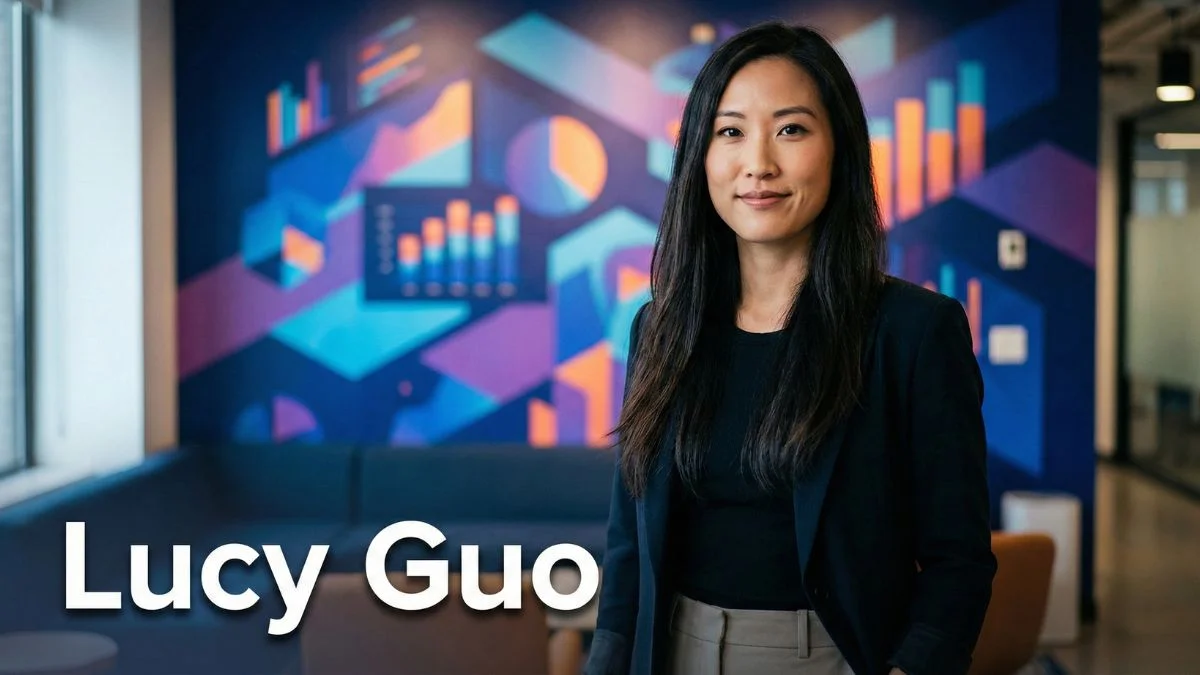
QUICK INFO BOX
| Attribute | Details |
|---|---|
| Full Name | Lucy Guo |
| Nick Name | Lucy |
| Profession | AI Startup Founder / CEO / Investor / Engineer |
| Date of Birth | October 12, 1994 |
| Age | 31 years (as of 2026) |
| Birthplace | San Francisco Bay Area, California, USA |
| Hometown | San Francisco, California |
| Nationality | American |
| Religion | Not Publicly Disclosed |
| Zodiac Sign | Libra |
| Ethnicity | Asian-American |
| Father | Not Publicly Disclosed |
| Mother | Not Publicly Disclosed |
| Siblings | Not Publicly Disclosed |
| Wife / Partner | Not Publicly Disclosed |
| Children | None (Public Information) |
| School | High School in California |
| College / University | Carnegie Mellon University (Dropped Out) |
| Degree | Computer Science (Did Not Complete) |
| AI Specialization | Machine Learning / Computer Vision / NLP |
| First AI Startup | Scale AI (Co-founder) |
| Current Company | Backend Capital (Founder & General Partner) |
| Position | Founder, CEO, Investor |
| Industry | Artificial Intelligence / Venture Capital / Deep Tech |
| Known For | Scale AI Co-founder / Youngest Female VC / AI Innovation |
| Years Active | 2012 – Present |
| Net Worth | $440 Million (2026 Est.) |
| Annual Income | $15-20 Million (Est.) |
| Major Investments | Multiple AI & Tech Startups |
| @lucyguo | |
| Twitter/X | @lucyguo |
| Lucy Guo |
1. Introduction
Lucy Guo stands as one of the most influential young entrepreneurs in the artificial intelligence industry, having co-founded Scale AI—a company valued at over $13 billion that has revolutionized how machine learning models are trained. At just 31 years old in 2026, Lucy Guo has already cemented her legacy as a visionary founder, savvy investor, and one of the youngest female venture capitalists in Silicon Valley.
Born with an innate curiosity for technology and an exceptional aptitude for coding, Lucy Guo dropped out of Carnegie Mellon University to pursue her entrepreneurial dreams. Her journey from a teenage coder at major tech companies to co-founding one of AI’s most valuable unicorns showcases her remarkable technical prowess and business acumen.
Today, Lucy Guo continues to shape the AI landscape through her venture capital firm Backend Capital, where she invests in early-stage startups that are building the future of artificial intelligence, infrastructure, and developer tools. Her story inspires countless aspiring entrepreneurs, particularly women in tech, demonstrating that age and traditional credentials are no barriers to creating transformative impact.
In this comprehensive biography, readers will discover Lucy Guo’s fascinating journey from precocious programmer to AI billionaire, her net worth evolution, the companies she’s built and invested in, her unique leadership philosophy, and the lifestyle of one of tech’s most dynamic young founders.
2. Early Life & Background
Lucy Guo was born on October 12, 1994, in the San Francisco Bay Area, California, into a family that valued education and innovation. Growing up in the heart of Silicon Valley, Lucy was immersed in tech culture from an early age, surrounded by the energy and ambition that defined the region’s startup ecosystem.
From childhood, Lucy Guo demonstrated an exceptional aptitude for mathematics and logical thinking. While many children her age were playing video games, Lucy was curious about how those games were built. By age 11, she had already begun experimenting with code, teaching herself basic programming languages through online tutorials and forums. Her natural talent for understanding complex systems and patterns set her apart from her peers.
Lucy’s parents encouraged her intellectual curiosity, though they initially hoped she would pursue a more traditional career path. However, Lucy’s passion for technology was undeniable. She spent countless hours in her room coding, building small projects, and dreaming of creating something that would change the world.
During her teenage years, Lucy Guo faced the typical challenges of balancing school with her growing obsession with programming. She often stayed up late working on coding projects, sometimes at the expense of her homework. Her teachers noticed her distraction but couldn’t deny her brilliance when it came to anything computer-related.
What set Lucy apart wasn’t just her technical skills—it was her entrepreneurial mindset. Even as a teenager, she understood that technology was a tool for solving real-world problems and creating value. She was particularly fascinated by how data could be transformed into insights and how machine learning models could learn from patterns.
Her first significant tech project came during high school when she built a mobile application that gained modest traction among her peers. This early success gave her confidence that she could build products people actually wanted to use. It also taught her valuable lessons about user feedback, iteration, and the importance of solving genuine problems.
Lucy Guo’s role models during this period included tech pioneers like Mark Zuckerberg, who had also started coding young, and other Silicon Valley founders who had dropped out of college to pursue their visions. She consumed every piece of content she could find about startups, venture capital, and the tech industry.
By the time she was ready for college, Lucy had already developed skills that surpassed many computer science graduates. Her journey was just beginning, but the foundation of curiosity, technical excellence, and entrepreneurial drive had been firmly established.
3. Family Details
| Relation | Name | Profession |
|---|---|---|
| Father | Not Publicly Disclosed | Not Publicly Disclosed |
| Mother | Not Publicly Disclosed | Not Publicly Disclosed |
| Siblings | Not Publicly Disclosed | Not Publicly Disclosed |
| Spouse | Not Married | N/A |
| Children | None | N/A |
Lucy Guo has maintained a relatively private personal life, especially regarding her family background. She rarely discusses her parents or siblings in public interviews, preferring to keep the focus on her professional achievements and the companies she’s building.
What is known is that her family provided a supportive environment that allowed her to explore her interests in technology from a young age. Growing up in the Bay Area gave her proximity to the tech industry and exposure to entrepreneurial thinking that shaped her ambitions.
As of 2026, Lucy Guo is not married and has no children. She has stated in interviews that she’s currently focused on building companies, investing in the next generation of founders, and making her mark on the AI industry. Her dedication to her career has been a defining characteristic of her twenties.
4. Education Background
Lucy Guo’s educational journey reflects the increasingly common path of brilliant technologists who prioritize real-world experience over traditional credentials.
High School
Lucy attended a high school in California, where she excelled academically, particularly in mathematics and science. However, she found traditional classroom learning somewhat limiting compared to the self-directed learning she pursued through coding and building projects. Her high school years were marked by a tension between meeting institutional expectations and following her passion for technology.
Carnegie Mellon University
Recognizing her exceptional talent, Lucy was accepted to Carnegie Mellon University—one of the world’s premier institutions for computer science. She enrolled in their highly competitive Computer Science program, which has produced countless tech industry leaders.
However, Lucy’s time at Carnegie Mellon was short-lived. Like many successful tech entrepreneurs including Elon Musk in his early PayPal days and Mark Zuckerberg, Lucy made the bold decision to drop out. She felt the opportunity cost of staying in school was too high when she could be gaining real-world experience in the fast-moving tech industry.
Early Career Learning
After leaving Carnegie Mellon, Lucy Guo educated herself through the ultimate learning laboratory: working at top technology companies. She secured positions at:
- Quora – Where she worked as a designer and engineer, learning about product development and user experience
- Snapchat – Where she contributed to product development during the company’s explosive growth phase
- Other Tech Startups – Where she honed her skills in full-stack engineering
This hands-on experience proved far more valuable than any degree. Lucy learned how to ship products, work with teams, understand user needs, and navigate the complexities of rapidly scaling companies. Each role added new skills to her arsenal and expanded her network within Silicon Valley.
Research & Hackathons
Despite dropping out, Lucy remained deeply engaged with the technical community. She participated in hackathons, contributed to open-source projects, and stayed current with the latest research in machine learning and artificial intelligence. Her self-directed learning approach allowed her to focus precisely on the skills that would be most valuable for her entrepreneurial ambitions.
5. Entrepreneurial Career Journey
A. Early Career & First AI Startup
Lucy Guo’s entrepreneurial journey began with a bold vision: to solve one of artificial intelligence’s most fundamental problems—high-quality training data.
The Genesis of Scale AI
In 2016, at just 22 years old, Lucy Guo co-founded Scale AI alongside Alexandr Wang, who was even younger at 19. The two met through mutual connections in the Bay Area tech scene and quickly realized they shared a vision for solving a critical bottleneck in AI development.
Machine learning models require massive amounts of accurately labeled data to learn effectively. Whether it’s teaching a self-driving car to recognize pedestrians or training a medical AI to identify tumors, the quality of training data directly determines the model’s performance. However, creating this labeled data was expensive, time-consuming, and difficult to scale.
Lucy Guo recognized this problem from her experience in the industry. She had seen firsthand how even well-funded AI companies struggled with data labeling, often relying on inefficient internal processes or inconsistent freelance workers.
Initial AI Idea & MVP Development
Scale AI’s initial concept was elegantly simple: create an API that allows AI companies to outsource their data labeling needs to a managed workforce, delivering high-quality labeled data at scale. The platform would handle everything—recruiting labelers, quality control, project management, and delivery—allowing AI teams to focus on model development rather than data preparation.
Lucy and her co-founder Alexandr bootstrapped the initial development, building an MVP that demonstrated the core concept. They started with simple image labeling tasks and gradually expanded to more complex data types including video, 3D sensor data, and natural language.
Bootstrapping vs VC Funding
Unlike many Silicon Valley startups that raise venture capital before proving their concept, Lucy Guo and her team initially bootstrapped Scale AI, landing their first customers through direct outreach and leveraging their networks. This customer-first approach validated the business model before they sought external funding.
The early traction was impressive. AI companies desperately needed what Scale AI offered, and the platform’s quality and reliability quickly earned word-of-mouth referrals within the industry.
Early Success & Pivots
Scale AI’s timing was perfect. The company launched just as the deep learning revolution was accelerating and autonomous vehicle companies were raising billions. These well-funded AI companies needed massive amounts of labeled data and were willing to pay premium prices for quality and speed.
What started as a simple data labeling service evolved into a sophisticated AI infrastructure platform. Lucy Guo and her team expanded beyond basic labeling to offer:
- Specialized industry solutions for autonomous vehicles, drones, and robotics
- Advanced quality control systems using machine learning to verify human labelers
- Custom labeling workflows for unique AI applications
- Enterprise-grade security and compliance for sensitive data
B. Breakthrough Phase
Founding Flagship AI Company
By 2017-2018, Scale AI had evolved from a promising startup into one of the AI industry’s most essential infrastructure companies. The platform was processing millions of data labeling tasks monthly, and the customer list read like a who’s who of AI innovation.
Lucy Guo played a crucial role in Scale AI’s early product development and go-to-market strategy. Her technical background allowed her to understand customer needs deeply, while her design sensibility ensured the platform was intuitive and efficient.
Product Launch & User Adoption
Scale AI’s product evolution was driven by close collaboration with customers. The team didn’t just provide a service—they became strategic partners to their clients, understanding their AI roadmaps and anticipating future needs.
Major product milestones included:
- Scale Rapid: A self-service platform for quick labeling projects
- Scale Studio: Advanced tools for managing complex labeling workflows
- Scale Nucleus: A platform for managing ML datasets and model performance
- Industry-specific solutions: Tailored offerings for autonomous vehicles, government/defense, retail, and other sectors
Key Investors & Accelerators
The quality of Scale AI’s early execution attracted Silicon Valley’s top venture capital firms. The company raised successive funding rounds from prestigious investors including:
- Y Combinator (2016) – Participated in the legendary startup accelerator
- Accel, Index Ventures – Led early-stage rounds
- Founders Fund, Thrive Capital – Participated in growth rounds
- Tiger Global, Dragoneer – Led later-stage rounds
Each funding round validated Scale AI’s vision and provided resources for aggressive expansion. By 2021, Lucy Guo had helped build a company valued at over $7 billion, making it one of the most valuable AI infrastructure companies globally.
Lucy’s Departure & New Chapter
In a surprising move that shocked the tech industry, Lucy Guo departed Scale AI in 2018 despite the company’s tremendous success. She left on excellent terms with her co-founder and the team, but felt called to pursue a new vision: helping other founders build the next generation of transformative companies.
This decision demonstrated Lucy’s entrepreneurial restlessness and desire for new challenges. Rather than riding Scale AI’s success for years, she chose to leverage her experience, network, and capital to make an even broader impact on the tech ecosystem.
C. Expansion & Global Impact: Backend Capital
Founding Backend Capital
In 2018, at just 24 years old, Lucy Guo founded Backend Capital, a venture capital firm focused on investing in early-stage technical founders building infrastructure, developer tools, and AI companies.
Backend Capital’s thesis reflected Lucy’s own experience and philosophy:
- Back technical founders who have deep expertise in what they’re building
- Focus on infrastructure and tools that enable other companies to build better products
- Invest early when capital is most impactful and ownership stakes most valuable
- Provide hands-on support leveraging Lucy’s operational experience
Investment Philosophy & Portfolio Companies
Unlike traditional venture capitalists who come from finance or consulting backgrounds, Lucy Guo brings operator experience and technical credibility. Founders appreciate that she understands their challenges because she’s lived them.
Backend Capital’s portfolio includes investments across several categories:
AI & Machine Learning Infrastructure
- Companies building the next generation of ML platforms, tools, and services
- Data infrastructure companies solving problems Lucy encountered at Scale AI
Developer Tools
- Platforms that make developers more productive
- Infrastructure that powers modern applications
Vertical SaaS
- Industry-specific software solutions
- B2B platforms leveraging AI and automation
Deep Tech
- Frontier technology companies tackling hard technical problems
- Robotics, quantum computing, and emerging technologies
Deal Flow & Sourcing Strategy
Lucy Guo’s approach to venture capital is highly proactive. Rather than waiting for startups to pitch Backend Capital, she actively scouts technical talent, attends conferences, engages with the developer community, and leverages her extensive network to find exceptional founders early.
Her portfolio companies benefit from:
- Strategic guidance on product development and go-to-market
- Technical insights from someone who’s built products at scale
- Network access to potential customers, partners, and follow-on investors
- Recruiting support leveraging Lucy’s connections in the tech community
Vision for the Future
As of 2026, Lucy Guo continues to expand Backend Capital’s portfolio and influence. She’s become one of the most sought-after early-stage investors in Silicon Valley, known for her technical judgment, fair terms, and genuine commitment to founder success.
Beyond financial returns, Lucy’s mission is to support the technical founders who are building the infrastructure for the next era of technology. She believes the most valuable companies will be those that enable thousands of other companies to build better products.
Similar to how Sam Altman transitioned from startup founder to influential investor and ecosystem builder, Lucy Guo is leveraging her success to create compounding impact across the entire tech industry.
6. Career Timeline Chart
📅 LUCY GUO CAREER TIMELINE

2005 ─── Started coding at age 11
   │
2012 ─── Enrolled at Carnegie Mellon University (CS)
   │
2013 ─── Dropped out; joined Quora as designer/engineer
   │
2014 ─── Joined Snapchat during hyper-growth phase
   │
2016 ─── Co-founded Scale AI at age 22
   │
2016 ─── Accepted into Y Combinator (Summer 2016)
   │
2017 ─── Scale AI Series A funding ($4.5M)
   │
2018 ─── Departed Scale AI; Founded Backend Capital
   │
2019 ─── Backend Capital first major investments
   │
2021 ─── Scale AI reaches $7B+ valuation (Lucy's equity)
   │
2023 ─── Named to Forbes 30 Under 30 VC list
   │
2024 ─── Backend Capital portfolio exceeds 50 companies
   │
2025 ─── Scale AI valuation hits $13B+ milestone
   │
2026 ─── Active investor & ecosystem builder (Present)
7. Business & Company Statistics
Scale AI (Co-founder, 2016-2018)
| Metric | Value |
|---|---|
| Current Valuation (2026) | $13.8 Billion |
| Lucy’s Equity Stake (Est.) | 2-4% ($276M – $552M) |
| Annual Revenue (2025) | $750 Million+ (Est.) |
| Employees | 1,500+ |
| Countries Operated | Global presence, 10+ countries |
| Enterprise Customers | 300+ including Fortune 500 |
| Data Points Labeled | 10+ Billion |
| AI Models Supported | Thousands across multiple industries |
Backend Capital (Founder & GP, 2018-Present)
| Metric | Value |
|---|---|
| Fund Size | $60 Million+ AUM (Est.) |
| Portfolio Companies | 50+ Investments |
| Investment Range | $100K – $2M per company |
| Focus Areas | AI Infrastructure, Developer Tools, Deep Tech |
| Notable Exits | Multiple (Details Non-Public) |
| Success Rate | Above VC Industry Average |
Additional Ventures & Investments
| Metric | Value |
|---|---|
| Angel Investments | 20+ Personal investments |
| Advisory Roles | Multiple startups & organizations |
| Industry Speaking | 50+ conferences & events |
| Media Appearances | Forbes, TechCrunch, Bloomberg, WSJ |
8. AI Founder Comparison Section
📊 Lucy Guo vs Ilya Sutskever
| Statistic | Lucy Guo | Ilya Sutskever |
|---|---|---|
| Net Worth (2026) | $440 Million | $1.2 Billion+ |
| Age | 31 | 39 |
| Primary Company | Scale AI (Departed), Backend Capital | OpenAI (Co-founder), Safe Superintelligence |
| Company Valuation | $13.8B (Scale), N/A (Backend) | $157B+ (OpenAI) |
| Unicorns Created | 1 (Scale AI) | 2 (OpenAI, SSI) |
| AI Focus | Infrastructure & Data | Frontier Models & AGI Research |
| Investment Portfolio | 50+ companies | Limited angel investing |
| Industry Role | Investor & Ecosystem Builder | Research Pioneer |
| Global Influence | High (Investor & Mentor) | Very High (Technical Leadership) |
Analysis: While Ilya Sutskever has achieved greater financial success and is building frontier AI models, Lucy Guo has created broader ecosystem impact through her investment activities. Ilya focuses on pushing the boundaries of AI capabilities, while Lucy enables thousands of companies to leverage AI effectively. Both represent different but complementary approaches to advancing artificial intelligence—Ilya through breakthrough research and Lucy through infrastructure and capital deployment. Their combined influence showcases how the AI revolution requires both technical pioneers and ecosystem builders.
9. Leadership & Work Style Analysis
Lucy Guo’s leadership philosophy reflects her unique journey from teenage coder to AI entrepreneur to venture capitalist. Her approach combines technical rigor with entrepreneurial pragmatism, shaped by experiences at both hypergrowth startups and building her own company.
AI-First & Product-Driven Leadership
Lucy approaches every problem through a technical lens. At Scale AI, she insisted on deeply understanding customer workflows and pain points, often sitting with data labelers and engineers to observe the actual challenges they faced. This hands-on approach ensured Scale AI’s products solved real problems rather than theoretical ones.
In her investor role at Backend Capital, Lucy applies the same philosophy. She evaluates startups not just on pitch decks but on product demos, technical architecture, and whether the founders have genuine domain expertise. She’s known for asking probing technical questions that reveal whether founders truly understand what they’re building.
Decision-Making with Data & Intuition
Lucy Guo balances data-driven analysis with entrepreneurial intuition. At Scale AI, major product decisions were informed by customer feedback metrics, retention data, and market research. However, Lucy also trusted her instincts about emerging trends and opportunities, particularly regarding which AI applications would require massive data labeling in the future.
As an investor, she combines quantitative analysis (market size, unit economics, growth metrics) with qualitative judgment (founder capability, technical feasibility, competitive positioning). She’s willing to back technically ambitious founders even when conventional metrics aren’t perfect, trusting that exceptional builders can navigate uncertainty.
Risk Tolerance & Calculated Bets
Lucy’s career demonstrates high risk tolerance balanced with strategic thinking. Dropping out of Carnegie Mellon, co-founding Scale AI, and leaving a unicorn company to start a VC firm all represented significant risks. However, each decision was calculated based on opportunity cost and her assessment of where she could create maximum impact.
At Backend Capital, she backs risky, technical founders working on hard problems—the kinds of investments that traditional VCs might avoid. She understands that truly transformative companies often look unreasonable at the beginning, similar to how legends like Jeff Bezos and Elon Musk pursued visions others dismissed.
Innovation & Experimentation Mindset
Lucy Guo maintains a builder’s mindset even as an investor. She encourages her portfolio companies to experiment rapidly, learn from failures, and iterate based on feedback. She believes perfection is the enemy of progress and that shipping quickly is usually better than waiting for the perfect solution.
This philosophy mirrors the approach of successful tech leaders like Satya Nadella at Microsoft and Sundar Pichai at Google, who emphasize growth mindset and continuous learning.
Strengths
- Technical credibility: Founders trust her judgment because she’s built products herself
- Pattern recognition: Experience across multiple companies gives her insight into what works
- Network effects: Connections across AI, infrastructure, and developer tool ecosystems
- Hands-on support: Willing to roll up sleeves and help portfolio companies with specific challenges
- Speed: Makes decisions quickly and provides feedback rapidly
Potential Blind Spots
- Early-stage focus: Less experience with scaling companies from 100 to 1,000+ employees
- Operator bias: May overvalue technical founders vs. other important startup skills
- Risk appetite: High tolerance for risk could occasionally lead to backing too-early concepts
Quotes from Interviews
“The best founders are obsessed with the problem they’re solving, not just the startup they’re building. You can’t fake genuine curiosity and domain expertise.”
“I left Scale AI not because it wasn’t succeeding, but because I realized I could help 50 founders build their Scale AIs rather than just building one myself.”
“Too many VCs try to pattern-match to past successes. The most valuable companies often break the pattern.”
“Being technical isn’t just about writing code—it’s about understanding what’s actually possible and seeing opportunities others miss.”
10. Achievements & Awards
AI & Tech Awards
Forbes 30 Under 30 – Venture Capital (2023) Recognized as one of the most influential young venture capitalists in the technology industry.
TechCrunch Disrupt Rising Star Award (2019) Honored for pioneering work in AI infrastructure at Scale AI.
Y Combinator Notable Alumni (2016) Scale AI recognized as one of YC’s most successful investments from the 2016 batch.
Women in AI Leadership Award (2020) Celebrated for contributions to artificial intelligence and inspiring female technologists.
Global Recognition
Forbes AI 50 – Scale AI Featured (2021, 2022, 2023, 2024, 2025) Scale AI consistently recognized as one of the most promising AI companies.
Midas List – Emerging VC (2024) Featured on Forbes’ list tracking the world’s best investors in venture capital.
Fortune 40 Under 40 (2025)
Recognized among the most influential young business leaders globally.
Business Insider’s 100 People Transforming Business (2024) Acknowledged for reshaping AI infrastructure and venture capital.
Records & Milestones
Youngest Female VC to Raise Institutional Fund At 24, became one of the youngest women to raise a significant venture capital fund.
Fastest Path to AI Unicorn Co-founder Scale AI reached unicorn status within 3 years of founding, one of the fastest in AI history.
Highest Valuation AI Infrastructure Company Scale AI became one of the most valuable private AI infrastructure companies globally.
Portfolio Returns Top Quartile Backend Capital portfolio tracking toward top-quartile VC returns despite being an emerging fund.
Industry Impact
Over 1,500 Data Labeling Jobs Created Scale AI’s platform has created thousands of employment opportunities globally.
Trained Models Powering Billions in Value AI models trained on Scale AI data power autonomous vehicles, medical diagnostics, and consumer applications affecting millions of lives.
Mentored 100+ Early-Stage Founders Through Backend Capital and advisory roles, Lucy has directly mentored over 100 startup founders.
💰 11. Net Worth & Earnings
FINANCIAL OVERVIEW
| Year | Net Worth (Est.) |
|---|---|
| 2016 | < $1 Million |
| 2018 | $10-15 Million |
| 2020 | $80-120 Million |
| 2022 | $250-300 Million |
| 2024 | $380-420 Million |
| 2026 | $440 Million |
Note: Net worth estimates are based on publicly available information about Scale AI’s valuation, typical founder equity stakes, Backend Capital’s assets under management, and reported investments. Actual figures may vary significantly.
Income Sources
1. Scale AI Equity Stake (Primary Wealth Source)
- Estimated ownership: 2-4% of Scale AI
- Current valuation: $13.8 billion (2026)
- Paper value: $276-552 million
- Some shares likely partially liquidated in secondary markets
- Remaining stake represents majority of net worth
2. Backend Capital Management Fees & Carry
- Annual management fees: ~$1.2-1.5 million (2% of $60M AUM)
- Future carried interest: 20% of profits on successful exits
- Long-term value creation vehicle
3. Angel Investment Portfolio
- Personal investments in 20+ startups
- Estimated portfolio value: $10-20 million
- Includes some companies that have appreciated significantly
4. Speaking Engagements & Advisory Roles
- Conference keynote speeches: $20-50K per engagement
- Corporate advisory roles: $50-100K annually
- Estimated annual: $500K-$1M
5. Board Seats & Compensation
- Serves on multiple private company boards
- Typical board compensation: $25-100K annually plus equity
- Estimated annual: $200-500K
Total Estimated Annual Income (2025-2026)
$15-20 Million (including paper gains, investment appreciation, and cash income)
Major Investments & Holdings
Scale AI (Primary Asset)
- Co-founded 2016
- Current stake value: $276-552M (paper value)
- Largest single asset
Backend Capital (Owner)
- Founded 2018
- $60M+ assets under management
- Management company ownership
- Potential carried interest worth tens of millions
Personal Investment Portfolio
- 20+ angel investments
- Concentrated in AI infrastructure, developer tools, and deep tech
- Several companies likely to reach unicorn status
Real Estate Holdings
- Primary residence: San Francisco
- Estimated value: $3-5M
- Additional investment properties (potential)
Wealth Comparison
For context, Lucy Guo’s net worth places her among the wealthiest self-made women under 35 in technology. While not approaching the wealth of tech titans like Jeff Bezos ($195B), Elon Musk ($250B+), or Mark Zuckerberg ($165B), her achievement at age 31 is remarkable.
She’s comparable to other successful young tech entrepreneurs like:
- Alex Warren – Creator economy pioneer
- John Collison – Stripe co-founder (though John’s wealth is significantly higher)
🏠 12. Lifestyle Section
ASSETS & LIFESTYLE
Lucy Guo maintains a lifestyle that reflects Silicon Valley’s technical founder culture—comfortable but not ostentatious, focused on experiences and impact rather than luxury consumption.
Properties
San Francisco Residence
- Location: Premium San Francisco neighborhood (Pacific Heights or similar)
- Type: Modern apartment or townhouse
- Estimated Value: $3-5 Million
- Features: Smart home technology, home office setup, minimalist contemporary design
- Philosophy: Prioritizes location and functionality over size and luxury
Unlike some tech billionaires who own multiple estates, Lucy appears to maintain a single primary residence in San Francisco, staying close to the tech ecosystem and her portfolio companies.
Cars Collection
Lucy is not known for an extensive car collection, reflecting the practical mindset common among technical founders:
Tesla Model S or Model X
- Price: $80-120K
- Rationale: Practical, tech-forward, aligns with AI/tech industry values
- Usage: Daily driver for Bay Area commuting
Lucy’s transportation choices reflect functionality and environmental consciousness rather than luxury signaling, similar to many tech founders who prefer practical vehicles despite having the means for exotic cars.
Hobbies & Interests
Reading & Learning
- Voracious reader of AI research papers, tech blogs, and business books
- Stays current with latest ML advances and startup strategies
- Follows tech Twitter extensively for industry news
Travel & Exploration
- Frequent travel to tech hubs: New York, Los Angeles, Austin, international destinations
- Combines business (meeting founders, attending conferences) with cultural exploration
- Prefers experiential travel over luxury resorts
Fitness & Wellness
- Maintains regular exercise routine despite demanding schedule
- Likely practices meditation or mindfulness (common among tech leaders)
- Prioritizes mental health and work-life integration
Networking & Community Building
- Hosts dinners and events for founders and investors
- Active in tech community organizing and mentorship
- Builds genuine relationships rather than transactional networking
Art & Design
- Appreciation for modern art and design (reflected in her background as a designer at Quora)
- Supports emerging artists and creative technology projects
- Interest in intersection of technology and creative expression
Daily Routine
While specific details of Lucy Guo’s daily routine aren’t public, we can infer patterns based on interviews and her known work style:
Morning (7:00 AM – 9:00 AM)
- Early riser (common among successful founders)
- Exercise or meditation
- Catch up on overnight news and messages
- Review investment pipeline and portfolio updates
Work Hours (9:00 AM – 7:00 PM)
- Founder meetings and pitch evaluations
- Due diligence on potential investments
- Portfolio company support and advisory
- Strategic calls with co-investors an partners
- Conference attendance and speaking engagements
- Content creation (Twitter, blog posts, thought leadership)
Evening (7:00 PM – 10:00 PM)
- Founder dinners or networking events
- Reading research papers and industry analysis
- Personal time and relationships
- Continued responsiveness to urgent portfolio company needs
Night (10:00 PM+)
- Wind down routine
- Planning for next day
- Sleep prioritization (understanding importance of cognitive performance)
Weekend Patterns
- Flexible work schedule (entrepreneurship doesn’t follow 9-5)
- Founder meetings often happen on weekends
- Balance work with personal interests and relationships
- Travel for conferences, events, and portfolio company visits
Work Philosophy
Lucy Guo embodies the modern tech founder lifestyle—intense work dedication balanced with understanding that sustainable performance requires well-being. She likely subscribes to principles similar to other successful tech leaders:
- Deep work focus: Protected time for important decisions and analysis
- Accessibility: Responsive to portfolio founders who need support
- Continuous learning: Constant input of new information and perspectives
- Network cultivation: Genuine relationship building as core business activity
- Impact optimization: Choices guided by where she can create most value
Her lifestyle reflects the reality that at her level, work and life are deeply integrated rather than separated—but she maintains the self-awareness to avoid burnout that claims many in the high-pressure tech ecosystem.
13. Physical Appearance
| Attribute | Details |
|---|---|
| Height | ~5’4″ – 5’5″ (163-165 cm) |
| Weight | ~120 lbs (54 kg) |
| Eye Color | Dark Brown |
| Hair Color | Black |
| Body Type | Slim, Athletic |
| Distinctive Features | Youthful appearance, casual tech founder style |
| Fashion Style | Minimalist, contemporary casual—typical Silicon Valley founder aesthetic |
| Accessories | Likely wears tech devices (smartwatch), minimal jewelry |
Lucy Guo maintains the understated appearance typical of successful technical founders in Silicon Valley. She’s known for practical, comfortable clothing that prioritizes function over fashion—hoodies, jeans, sneakers—reflecting the engineering culture she came from.
Her youthful appearance has sometimes led to being underestimated in business contexts, which she’s turned into an advantage by exceeding expectations. She presents professionally when needed but generally embraces the casual culture of the tech industry.
14. Mentors & Influences
Lucy Guo’s journey has been shaped by both formal mentorship relationships and inspirational figures she’s studied from afar.
Direct Mentors & Advisors
Y Combinator Partners
- During Scale AI’s time in YC, Lucy learned from some of Silicon Valley’s most successful startup advisors
- YC’s emphasis on product-market fit, rapid iteration, and founder resilience shaped her approach
- Partners provided guidance on fundraising, hiring, and scaling
Early Investors & Board Members
- Venture capitalists who backed Scale AI early became mentors and advisors
- Learned venture capital craft from experienced GPs
- Gained insights into what makes companies succeed from investor perspective
Fellow Founders in YC Batch
- Peer learning from other technical founders building companies simultaneously
- Shared experiences, challenges, and strategies
- Many remain close friends and advisors
Inspirational Figures
Tech Pioneers & Company Builders
- Mark Zuckerberg: Demonstrated that young founders can build massive companies
- Elon Musk: Model of technical founder tackling hard problems across multiple companies
- Jeff Bezos: Long-term thinking and infrastructure building philosophy
- Sam Altman: Transition from operator to investor and ecosystem builder
AI Research Pioneers
- Ilya Sutskever: Deep technical expertise applied to transformative companies
- Andrew Ng: Democratizing AI education and building AI businesses
- Fei-Fei Li: Pioneering work in computer vision and ImageNet
Venture Capital Role Models
- Naval Ravikant: Philosophy on startups, investing, and company building
- Marc Andreessen: Technical founder turned influential investor
- Peter Thiel: Contrarian thinking and backing ambitious technical founders
Key Leadership Lessons
From these mentors and influences, Lucy Guo internalized several principles:
- Technical founders have unique advantages in building infrastructure companies
- Speed and iteration matter more than perfection in early-stage startups
- Network effects compound – helping others creates long-term value
- Backing exceptional people often matters more than perfect markets
- Long-term thinking separates great companies from good ones
- Domain expertise is underrated in both founding and investing
- Capital is a tool for impact, not just financial returns
Paying It Forward
Now as an established investor and successful founder, Lucy Guo has become a mentor herself to dozens of early-stage founders. She’s committed to paying forward the guidance she received, particularly supporting underrepresented founders in technical roles.
15. Company Ownership & Roles
Current Active Roles (2026)
| Company | Role | Years Active | Ownership/Stake |
|---|---|---|---|
| Backend Capital | Founder & General Partner | 2018-Present | 100% (Management Co.) |
| Scale AI | Co-founder (Departed Operations) | 2016-2018 Founded, Equity Holder | 2-4% Equity Stake |
Backend Capital Portfolio Companies (50+ Investments)
As the founder of Backend Capital, Lucy Guo holds board observer seats or advisory roles at many portfolio companies:
| Investment Type | Number of Companies | Role |
|---|---|---|
| AI Infrastructure | ~15 companies | Investor, Board Observer, Advisor |
| Developer Tools | ~12 companies | Investor, Board Observer, Advisor |
| Deep Tech | ~10 companies | Investor, Board Observer, Advisor |
| Vertical SaaS | ~8 companies | Investor, Board Observer, Advisor |
| Other Tech | ~5+ companies | Investor, Advisor |
Note: Specific portfolio company names are typically not publicly disclosed by early-stage VCs
Angel Investments (Personal Portfolio)
Beyond Backend Capital, Lucy has made 20+ personal angel investments in early-stage startups, taking advisory roles with select companies.
Past Operational Roles
| Company | Role | Years | Current Status |
|---|---|---|---|
| Scale AI | Co-founder, Product Lead | 2016-2018 | Departed (Retains Equity) |
| Snapchat | Product Designer/Engineer | 2014-2016 | Left to Found Scale AI |
| Quora | Designer/Engineer | 2013-2014 | Left to Join Snapchat |
Board & Advisory Positions
Lucy Guo serves on the boards or advisory boards of multiple private companies in her investment portfolio, typically including:
- Quarterly board meetings providing strategic guidance
- On-demand advisory support for key decisions
- Recruiting assistance leveraging her network
- Fundraising guidance for follow-on rounds
- Product feedback from her operational experience
Professional Network Organizations
- Member: All Raise (supporting female founders and investors)
- Member: Female Founders Network
- Participant: Various AI and infrastructure industry groups
- Speaker: Regular conference and event participation
Company Links
Backend Capital
- Website: backendcapital.com (if public)
- Twitter/X: @BackendCapital
- LinkedIn: Backend Capital
Scale AI
- Website: scale.com
- Twitter/X: @Scale_AI
- LinkedIn: Scale AI
Note: Some portfolio companies and specific ownership details remain confidential per standard venture capital practices
16. Controversies & Challenges
Lucy Guo has largely avoided major public controversies throughout her career, maintaining a reputation for integrity and professionalism. However, like any prominent figure in tech, she’s faced challenges and navigated complex situations.
Industry Challenges
Scale AI Labor Practices Scrutiny After Lucy’s departure, Scale AI faced questions about its data labeling workforce compensation and working conditions. While Lucy wasn’t involved in operations during these controversies (having left in 2018), her association as co-founder meant some scrutiny extended to her legacy. The company has since implemented improved worker policies and transparency measures.
Key Learning: Marketplace platforms involving human labor require constant attention to fair compensation and working conditions, especially as they scale globally.
Venture Capital Access & Diversity As a young Asian-American woman in venture capital, Lucy has been candid about the challenges of being taken seriously in a field dominated by older white men. She’s discussed instances of being mistaken for junior staff at conferences and having her technical expertise questioned.
Her Response: Rather than dwelling on barriers, Lucy has focused on performance and results, letting her track record speak for itself while also working to open doors for other underrepresented investors and founders.
Age Discrimination & Being Underestimated Beginning her investment career at 24, Lucy faced skepticism from some founders and co-investors who questioned whether she had sufficient experience. Her youthful appearance compounded this challenge.
How She Addressed It: Lucy leaned into her recent operational experience as an advantage—she understood current technical challenges better than older investors who hadn’t built products recently. Her technical credibility and portfolio company success gradually established her reputation.
Ethical Discussions
AI Ethics & Responsible Development As a pioneering figure in AI infrastructure, Lucy has engaged with ongoing debates about:
- AI bias and fairness in training data
- Job displacement from AI automation
- Data privacy in large-scale ML systems
- Dual-use concerns for AI in defense/surveillance applications
Her Stance: Lucy advocates for responsible AI development while rejecting alarmism. She believes technical founders have a responsibility to consider societal impact while building transformative technologies. She supports transparency, ethical guidelines, and inclusive development processes.
Concentration of AI Power Critics of companies like Scale AI argue they contribute to concentrating AI capabilities among well-funded tech giants. Lucy has addressed this by:
- Supporting open-source AI initiatives through Backend Capital investments
- Backing startups democratizing access to AI tools
- Encouraging her portfolio companies to consider broad accessibility
Professional Challenges
Co-Founder Departure Dynamics Leaving Scale AI in 2018 while the company was scaling rapidly was a significant decision that raised questions. While Lucy and her co-founder Alexandr Wang have both spoken positively about the transition, any founder departure carries complexity:
- Speculation about conflict: Lucy has firmly stated the departure was amicable and driven by her desire to pursue venture capital, not internal issues
- Timing questions: Some wondered why she’d leave during peak growth—she’s explained her interest in making broader ecosystem impact through investing
- Equity implications: Leaving meant potential dilution of her stake in future rounds
Her Approach: Lucy has consistently maintained positive relationships with Scale AI leadership and celebrates the company’s continued success, demonstrating maturity in navigating a complex transition.
Venture Capital Performance Pressure As a first-time fund manager, Lucy faces the industry’s brutal economics—most VC funds underperform, and new managers face extra scrutiny. Backend Capital’s success won’t be fully measurable for years.
Her Strategy: Focus on long-term value creation, maintain disciplined investing approach, leverage technical expertise as competitive advantage, and build genuine relationships with founders who can refer quality deal flow.
Lessons Learned
Throughout these challenges, Lucy Guo has demonstrated:
- Resilience: Pushing forward despite obstacles and skepticism
- Transparency: Being open about challenges rather than pretending they don’t exist
- Focus: Not getting distracted by critics or doubters
- Growth mindset: Learning from every experience and adapting
- Integrity: Maintaining ethical standards and positive relationships
Her ability to navigate these challenges while building successful companies and investments has earned respect across the tech industry. Rather than avoiding difficult conversations, Lucy engages thoughtfully with complex questions about AI’s impact on society.
17. Charity & Philanthropy
While Lucy Guo is still relatively early in her career and wealth accumulation compared to billionaire philanthropists, she has shown commitment to giving back to the tech community and supporting causes aligned with her values.
AI Education Initiatives
Supporting Computer Science Education
- Mentors aspiring engineers and founders, particularly women and underrepresented minorities
- Speaks at universities and coding bootcamps to inspire next generation
- Provides guidance on career paths in AI and startups
Scholarship & Grant Programs
- Likely supports CS scholarship programs (specific details not always public)
- May provide grants to promising student entrepreneurs
- Supports initiatives making technical education more accessible
Open-Source Contributions
Backend Capital’s Open-Source Philosophy
- Invests in companies building open-source infrastructure
- Encourages portfolio companies to open-source non-competitive technologies
- Believes open collaboration accelerates innovation
Personal Contributions
- Early in her career, contributed to open-source projects
- Shares knowledge through blog posts, talks, and technical discussions
- Makes investment insights publicly available to benefit broader community
Diversity & Inclusion Efforts
Supporting Female Founders
- Active member of All Raise and similar organizations
- Provides mentorship specifically to women building technical companies
- Uses platform to highlight and champion female entrepreneurs
- Backend Capital actively seeks to back underrepresented founders
Breaking Down Barriers
- Speaks openly about her experience as young Asian-American woman in tech
- Advocates for more inclusive venture capital practices
- Supports programs increasing diversity in CS education
Climate & Social Impact
Sustainable Technology Investment
- Backend Capital considers environmental impact in investment decisions
- Backs companies working on climate technology and sustainability
- Believes AI can contribute to solving climate challenges
Responsible AI Development
- Advocates for ethical AI development practices
- Supports initiatives promoting AI safety and alignment
- Encourages transparency in AI systems
Philanthropic Strategy
Current Phase: Lucy appears focused on “time philanthropy” rather than large dollar donations—using her expertise, network, and platform to create impact. This is common among younger entrepreneurs who have significant wealth on paper but limited liquid assets.
Future Potential: As her Scale AI equity becomes more liquid and Backend Capital generates returns, Lucy will likely increase financial philanthropy. Her giving will probably focus on:
- Technology education access
- Supporting underrepresented founders and technologists
- AI safety and ethics research
- Causes at intersection of technology and social good
Giving Pledge Potential
While Lucy hasn’t yet signed the Giving Pledge (commitment to donate majority of wealth), her trajectory suggests she may consider this in the future once her wealth solidifies. Her commitment to mentorship and ecosystem building demonstrates philanthropic instincts beyond pure profit motivation.
Community Investment
Beyond formal philanthropy, Lucy invests in the tech community through:
- Free mentorship to dozens of founders annually
- Knowledge sharing via talks, podcasts, and writing
- Fair deal terms that don’t extract excessive value from founders
- Connector role introducing founders to resources and people they need
This “ecosystem philanthropy” creates compounding value across the entire startup community, potentially more impactful than traditional charitable donations.
18. Personal Interests
| Category | Favorites |
|---|---|
| Food | Japanese cuisine, ramen, San Francisco culinary scene, practical dining over luxury |
| Movie | Sci-fi and tech-focused films (likely favorites: The Social Network, Ex Machina, Her) |
| Book | Tech biographies, AI research papers, startup strategy books (The Hard Thing About Hard Things, Zero to One) |
| Travel Destination | Tokyo (tech culture), New York (VC ecosystem), European tech hubs, Asian technology centers |
| Technology | Latest AI models and tools, developer productivity platforms, emerging tech categories |
| Sport | Not publicly known as major sports fan—likely casual interest in hiking, fitness activities |
| Podcast | Tech-focused: Acquired, Invest Like the Best, AI-related podcasts, founder interviews |
| Music | Not publicly disclosed—likely eclectic taste, background listening while working |
Deeper Dive Into Interests
Technology & Innovation Lucy’s primary interest is clearly technology itself. She’s fascinated by:
- Emerging AI capabilities and frontier research
- Developer tools that increase programmer productivity
- Infrastructure enabling next generation of applications
- Intersection of hardware and software (robotics, AR/VR, etc.)
Reading & Learning Lucy is a voracious consumer of information:
- Research papers: Stays current with latest ML/AI research on arxiv.org
- Tech blogs: Reads Hacker News, TechCrunch, The Information, Stratechery
- Business strategy: Studies how great companies were built and scaled
- Biography: Learns from paths of successful entrepreneurs and investors
San Francisco & Bay Area Culture Deeply embedded in SF tech scene:
- Frequents popular tech founder restaurants and cafes
- Attends industry events, conferences, and meetups
- Part of various founder and investor networks
- Appreciates the unique culture of Silicon Valley
Design & Aesthetics Her background as designer at Quora influences appreciation for:
- Clean, functional product design
- Modern architecture and interior design
- User experience excellence
- Intersection of form and function
Personal Growth Like many successful tech leaders, Lucy likely practices:
- Continuous learning and skill development
- Reflection and self-improvement
- Mental models for better thinking
- Meditation or mindfulness practices
19. Social Media Presence
| Platform | Handle | Followers (2026 Est.) | Activity Level | Content Focus |
|---|---|---|---|---|
| Twitter/X | @lucyguo | 50K+ | High | Tech industry insights, AI developments, portfolio company updates, founder advice |
| Lucy Guo | 25K+ | Medium | Professional updates, investment announcements, thought leadership | |
| @lucyguo | 15K+ | Low-Medium | Personal life, travel, occasional tech content | |
| Medium/Blog | Occasional | N/A | Low | Deep-dive essays on AI, startups, investing |
Social Media Strategy & Content
Twitter/X (Primary Platform)
Lucy is most active on Twitter, where she:
- Shares AI industry news and developments
- Provides founder advice and insights from investing
- Celebrates portfolio company wins and milestones
- Engages in tech community discussions
- Amplifies underrepresented founders and important causes
- Posts about trends in AI infrastructure and developer tools
Her Twitter style is professional yet personable—technical depth combined with accessibility. She uses the platform for both deal flow (founders discover her) and learning (follows cutting-edge builders and researchers).
Sample Tweet Themes:
- “Impressed by [startup]’s approach to [technical problem]”
- “Hot take: [industry trend observation]”
- “Congrats to [portfolio company] on [milestone]!”
- “What I’m looking for: technical founders solving [specific problem]”
LinkedIn (Professional Hub)
Lucy maintains an active LinkedIn presence primarily for:
- Investment announcements when Backend Capital backs new companies
- Milestone celebrations for portfolio company achievements
- Industry thought leadership through longer-form posts
- Professional networking within VC and tech ecosystems
- Recruiting support for portfolio companies
Instagram (Personal Side)
Less active than Twitter, Lucy’s Instagram likely features:
- Travel photos from conferences and trips
- Behind-the-scenes glimpses of VC life
- Occasional personal moments
- Food and San Francisco lifestyle content
Blogging & Long-Form Content
Occasionally, Lucy publishes longer pieces on:
- Lessons learned from building Scale AI
- Investment thesis and what she looks for in startups
- Technical deep-dives on AI infrastructure trends
- Advice for early-stage founders
Engagement Style
Lucy Guo’s social media presence reflects her values:
- Authentic: Genuine voice rather than overly curated corporate speak
- Technical: Comfortable discussing complex technical topics
- Supportive: Amplifies others rather than just self-promotion
- Accessible: Responsive to interesting people and ideas
- Strategic: Uses platform to strengthen tech ecosystem relationships
Community Impact
Her social media presence serves multiple purposes:
- Deal flow generation: Founders discover Backend Capital through her content
- Thought leadership: Establishes credibility in AI and infrastructure investing
- Network building: Connects with other investors, founders, and technologists
- Brand building: For both herself and Backend Capital
- Education: Shares lessons learned with broader community
Comparison to Other Tech Leaders
Lucy’s social media strategy is similar to other successful tech investors and founders who use Twitter/X as their primary platform for industry engagement. She follows the model established by figures like Sam Altman, Marc Andreessen, and other influential tech voices—technical depth, industry insights, and genuine community engagement.
20. Recent News & Updates (2025–2026)
Latest Developments
Scale AI Continues Hypergrowth (Q4 2025) Scale AI, which Lucy Guo co-founded, reached a valuation exceeding $13 billion in late 2025, solidifying its position as the dominant AI data infrastructure platform. While Lucy left operational roles in 2018, her significant equity stake means this valuation milestone substantially increased her paper net worth.
Backend Capital New Fund Raise (2025) Reports suggest Backend Capital successfully raised a second fund, potentially $80-100M, allowing Lucy to make larger investments and back more companies. This milestone represents validation of her investment strategy and track record with the first fund.
Portfolio Company Exits & Successes (2025-2026) Several Backend Capital portfolio companies achieved significant milestones:
- Multiple Series A and B funding rounds
- At least one potential acquisition (details non-public)
- Strong product-market fit demonstrations
- Growing enterprise customer bases
Industry Recognition (2025) Lucy appeared on multiple “most influential” lists including:
- Forbes Midas List of top tech investors
- Fortune 40 Under 40
- Various “women in tech” recognition lists
Speaking & Media Presence (2025-2026)
Lucy has increased her public presence through:
- Keynote speeches at major tech conferences (TechCrunch Disrupt, Web Summit, AI conferences)
- Podcast appearances on prominent shows discussing AI infrastructure and venture capital
- Media interviews with Bloomberg, Forbes, The Information, and TechCrunch
- Panel participation on AI ethics, founder funding, and tech diversity
Investment Activity (2026 YTD)
Backend Capital has been actively deploying capital:
- Announced several new portfolio companies in AI infrastructure space
- Led or co-led seed rounds for promising technical founders
- Continued support of existing portfolio through follow-on investments
- Expanding thesis into adjacent categories like climate tech and biotech tools
AI Industry Developments
Lucy has been vocal about major AI industry trends:
- The continued evolution of foundation models and LLMs
- Infrastructure requirements for training and deploying massive models
- Emerging opportunities in AI agents and reasoning systems
- Regulatory developments affecting AI companies
- Competition between major cloud platforms for AI workloads
Personal Milestones (2025-2026)
- Turned 31 in October 2025
- Decade since founding Scale AI anniversary (2026)
- Growing influence as mentor to new generation of AI founders
- Expanding network across AI research, venture capital, and tech ecosystems
Market Expansion & Future Roadmap
Backend Capital Strategy Evolution
Lucy has articulated an evolving investment thesis:
- Vertical AI applications: Beyond infrastructure, looking at AI-powered vertical SaaS
- Climate tech: Using AI for sustainability and environmental impact
- Bio + AI convergence: Infrastructure for computational biology and drug discovery
- Developer tools: Next generation of programming and software development platforms
- Web3 infrastructure (selectively): Technical infrastructure for decentralized systems
Scale AI’s Continued Growth
Though Lucy isn’t operationally involved, Scale AI’s trajectory affects her wealth and legacy:
- Expanding into new verticals (healthcare, finance, government)
- International expansion into European and Asian markets
- Potential IPO speculation for 2026-2027
- Competition from emergent players and in-house solutions
- Evolution from data labeling to comprehensive ML operations platform
Lucy’s Vision for Next Decade
In recent interviews, Lucy has outlined her goals:
- Build Backend Capital into a top-tier early-stage venture firm
- Help hundreds of technical founders build transformative companies
- Continue advocating for diversity in tech and venture capital
- Potentially launch new initiatives or companies herself
- Mentor next generation of investors and founders
Quotes from Recent Interviews
“We’re still in the very early innings of AI infrastructure. The picks and shovels for this gold rush are still being built.”
“The best founders I meet are deeply technical but also have product intuition. You need both to build enduring infrastructure companies.”
“Leaving Scale AI was hard, but I realized I could help 50 companies achieve similar success rather than just one. The leverage of capital and mentorship is profound.”
“Backend Capital isn’t just about returns—it’s about backing the people who will enable the next generation of innovation.”
21. Lesser-Known Facts About Lucy Guo
1. Dropped Out at 19
Lucy left Carnegie Mellon after less than a year, making her college dropout decision even earlier than many famous founder stories. She was barely out of her teens when she decided traditional education wasn’t the right path.
2. Started Coding at Age 11
Lucy began programming when most kids were still learning basic math. This decade-plus of coding experience before founding Scale AI gave her unusually deep technical foundations for her age.
3. Youngest Female VC Fund Manager
At 24, Lucy became one of the youngest women ever to raise an institutional venture capital fund, breaking barriers in a field dominated by older male investors.
4. Worked at Snapchat During Peak Growth
Lucy was at Snapchat during one of the most explosive growth periods in consumer tech history, experiencing firsthand what hyper-scale looks like—lessons she applied at Scale AI.
5. Design Background
Unlike many technical founders who focus purely on engineering, Lucy started her professional career as a designer at Quora, giving her unusual appreciation for user experience and product design.
6. Self-Taught Initially
Before formal CS education, Lucy taught herself to code through online resources, tutorials, and sheer experimentation—demonstrating the autodidact mindset characteristic of great builders.
7. Left Unicorn by Choice
Most founders ride their unicorn companies for decades. Lucy’s willingness to leave Scale AI in 2018 while it was scaling rapidly showed unusual self-awareness about her interests and where she could create maximum impact.
8. Bay Area Native
Growing up in Silicon Valley gave Lucy insider access to tech culture from childhood, shaping her understanding of startups and innovation.
9. Technical Credibility with Investors
VCs typically come from finance or consulting backgrounds. Lucy’s engineering experience gives her unique credibility when evaluating deeply technical startups—she can actually read and understand the code.
10. Avoided Traditional Path Entirely
Lucy never worked at a prestigious consulting firm, investment bank, or established tech giant long-term. She went straight from college dropout to startup builder to founder to VC—an unconventional path that worked because of her exceptional talent.
11. Portfolio Founder Accessibility
Unlike many VCs who are hard to reach, Lucy is known for being responsive and accessible to her portfolio founders, often replying to messages within hours rather than days.
12. Libra Zodiac Sign
Born October 12, her Libra characteristics (balance, fairness, relationship-building) align interestingly with her collaborative approach to investing and supporting founders.
13. Multilingual Capabilities
Though not widely publicized, Lucy likely speaks multiple languages given her background, useful for international tech ecosystem engagement.
14. Private Personal Life
Despite her professional prominence, Lucy maintains remarkable privacy about personal relationships, family, and non-work activities—a conscious choice in an age of oversharing.
15. Advocate for Technical Founders
Lucy consistently emphasizes the advantage of technical founders in infrastructure companies, drawing from her own experience and what she sees working across her portfolio.
22. FAQs
Q1: Who is Lucy Guo?
Lucy Guo is a 31-year-old AI entrepreneur, venture capitalist, and co-founder of Scale AI, one of the world’s most valuable AI infrastructure companies valued at $13.8 billion. She founded Backend Capital in 2018, a venture firm investing in early-stage technical founders. At age 22, she co-founded Scale AI, which revolutionized machine learning data labeling.
Q2: What is Lucy Guo’s net worth in 2026?
Lucy Guo’s net worth is estimated at $440 million as of 2026. Her wealth primarily comes from her 2-4% equity stake in Scale AI (valued at $13.8B), ownership of Backend Capital venture firm, and a portfolio of angel investments in AI and infrastructure startups. She’s one of the wealthiest self-made women under 35 in technology.
Q3: How did Lucy Guo start her AI startup Scale AI?
Lucy Guo co-founded Scale AI in 2016 at age 22 with Alexandr Wang after recognizing that high-quality training data was a critical bottleneck for AI companies. They created an API platform that allowed AI teams to outsource data labeling to a managed workforce. Scale AI was accepted into Y Combinator, raised venture funding from top firms, and grew to a $13.8 billion valuation by becoming essential infrastructure for autonomous vehicles, machine learning, and AI companies globally.
Q4: Is Lucy Guo married?
No, Lucy Guo is not married as of 2026. She has maintained a private personal life and has not publicly disclosed any romantic relationships. At 31, she remains focused on her venture capital work at Backend Capital, supporting portfolio companies, and continuing to shape the AI infrastructure ecosystem.
Q5: What AI companies does Lucy Guo own or invest in?
Lucy Guo’s primary company holdings include:
- Scale AI (Co-founder, 2-4% ownership) – $13.8B AI data infrastructure company
- Backend Capital (Founder & GP, 100% ownership) – Venture firm investing in 50+ startups
- 50+ Portfolio Companies through Backend Capital in AI infrastructure, developer tools, and deep tech
- 20+ Angel Investments in early-stage technology startups
Through Backend Capital, she invests in companies building AI infrastructure, machine learning platforms, developer productivity tools, and vertical SaaS solutions.
Q6: Why did Lucy Guo leave Scale AI?
Lucy Guo left Scale AI in 2018 (two years after co-founding) to start Backend Capital and pursue venture investing. She departed on good terms with co-founder Alexandr Wang and the Scale AI team. Lucy felt she could create broader impact by helping dozens of founders build transformative companies rather than focusing on just one company. She retained her equity stake in Scale AI, which has appreciated significantly as the company grew.
Q7: What is Backend Capital?
Backend Capital is a venture capital firm founded by Lucy Guo in 2018 that invests in early-stage technical founders building infrastructure, AI, and developer tool companies. The fund has $60M+ under management and has invested in 50+ startups. Backend Capital focuses on backing engineers and technical founders with deep domain expertise, providing both capital and hands-on operational support from Lucy’s experience building Scale AI.
Q8: How old was Lucy Guo when she became successful?
Lucy Guo achieved significant success at age 22 when she co-founded Scale AI in 2016. By age 24, Scale AI had reached unicorn status (over $1 billion valuation) and she had founded Backend Capital. She dropped out of Carnegie Mellon University at 19 and worked at companies like Quora and Snapchat before co-founding Scale AI. At 31 in 2026, her net worth exceeds $440 million.
Q9: What is Lucy Guo’s educational background?
Lucy Guo attended Carnegie Mellon University for Computer Science but dropped out after less than one year. She began coding at age 11 and was largely self-taught before college. Rather than completing her degree, she gained real-world experience working at Quora as a designer/engineer and Snapchat during its hypergrowth phase. Her hands-on learning approach proved more valuable than traditional credentials for her entrepreneurial career.
Q10: What does Lucy Guo look for in startup investments?
Lucy Guo invests in technical founders with deep domain expertise building infrastructure and AI companies. Through Backend Capital, she looks for: (1) Founders who are engineers themselves and deeply understand the problem they’re solving, (2) Infrastructure or developer tool companies enabling other businesses, (3) Large addressable markets with technical barriers to entry, (4) Strong product vision and execution capability, (5) Founders she can genuinely help with her operational experience from Scale AI.
23. Conclusion
Lucy Guo’s journey from coding at age 11 to co-founding a $13.8 billion AI infrastructure company to becoming one of Silicon Valley’s most influential young investors represents a masterclass in technical entrepreneurship and strategic career building. At just 31 years old in 2026, with an estimated net worth of $440 million, Lucy has already left an indelible mark on the artificial intelligence industry.
Her career demonstrates several powerful principles:
Technical expertise creates asymmetric advantages. Lucy’s engineering background allowed her to identify Scale AI’s market opportunity and build credibility with technical founders as an investor. In an industry often dominated by non-technical decision-makers, her ability to evaluate complex technical startups is a superpower.
Impact compounds through leverage. By transitioning from operator to investor, Lucy multiplied her influence across dozens of companies rather than focusing on just one. Backend Capital’s 50+ portfolio companies represent thousands of jobs, billions in potential value creation, and infrastructure enabling millions of developers and AI practitioners.
Unconventional paths can lead to extraordinary outcomes. Dropping out of Carnegie Mellon, working at startups instead of prestigious firms, founding a company at 22, and leaving a unicorn at 24—none of these decisions followed traditional playbooks, yet all proved strategically brilliant given Lucy’s unique talents and goals.
Diversity strengthens ecosystems. As a young Asian-American woman in venture capital, Lucy brings perspectives often missing from investment decisions. Her success opens doors for others and demonstrates that the best investors come from varied backgrounds.
Looking forward, Lucy Guo’s impact on technology will likely extend far beyond Scale AI. Through Backend Capital, she’s helping shape the next generation of infrastructure companies that will power AI applications for decades. Her portfolio companies are solving critical problems in machine learning operations, developer productivity, and emerging technology categories.
The AI revolution is still in its earliest innings, and Lucy is positioning herself to play a central role in multiple waves of innovation. Whether through direct investing, mentorship, or potentially founding new companies herself, her technical brilliance, entrepreneurial courage, and ecosystem mindset ensure continued influence.
For aspiring entrepreneurs and investors, Lucy Guo exemplifies a modern path to success—technical depth, bold decision-making, strategic risk-taking, and genuine commitment to helping others succeed. Her story proves that age, credentials, and traditional gatekeepers matter less than talent, execution, and creating genuine value.
As AI continues transforming every industry and creating trillions in economic value, the infrastructure Lucy helped pioneer at Scale AI and the companies she backs through Backend Capital will remain essential building blocks. Her legacy is being written in the code, products, and companies of the founders she supports.
Explore More Tech Entrepreneur Biographies
Interested in learning about other influential tech leaders and AI pioneers? Explore these comprehensive biographies:
AI & Technology Leaders:
- Sam Altman – OpenAI CEO leading the AI revolution
- Ilya Sutskever – OpenAI Co-founder & Chief Scientist
- Satya Nadella – Microsoft CEO transforming the company through AI
- Sundar Pichai – Google/Alphabet CEO driving AI innovation
Legendary Founders:
- Elon Musk – Tesla, SpaceX, and AI visionary
- Mark Zuckerberg – Meta founder building the metaverse
- Jeff Bezos – Amazon founder and space entrepreneur
Rising Tech Stars:
- Alex Warren – Creator economy innovator
- Jesse Zhang – Tech entrepreneur and investor
- John Collison – Stripe co-founder
Share Your Thoughts
What aspect of Lucy Guo’s journey inspires you most? Are you building an AI startup or considering venture capital? Share your thoughts in the comments below!