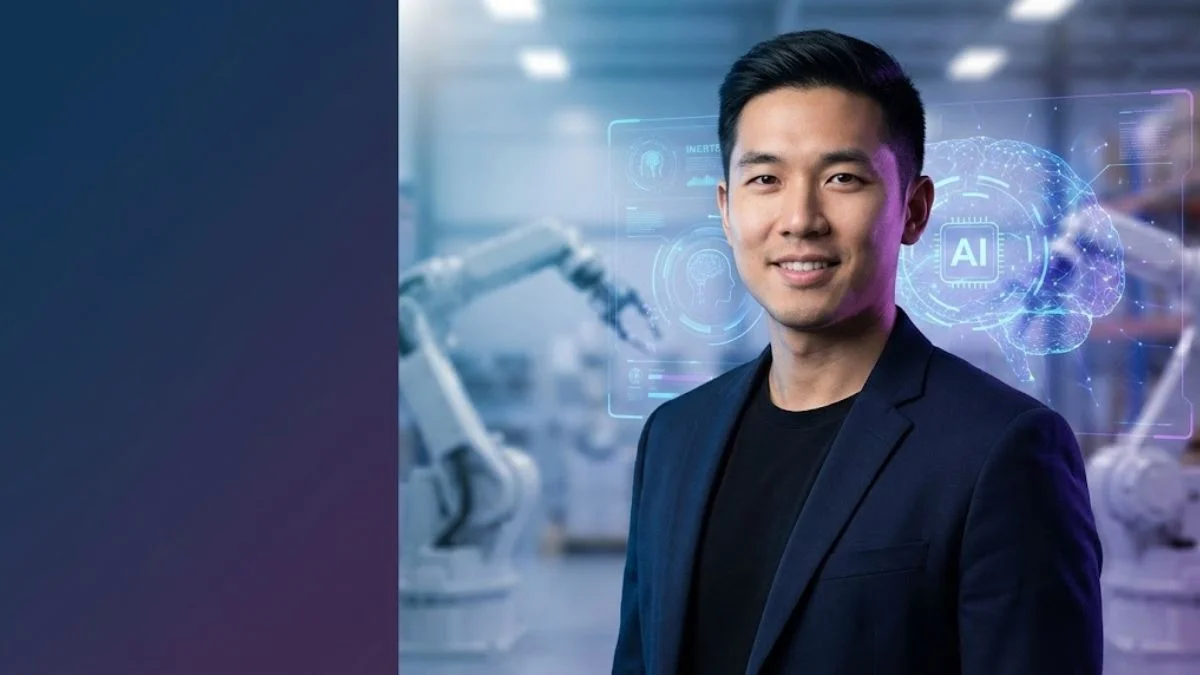
QUICK INFO BOX
| Attribute | Details |
|---|---|
| Full Name | Xi Chen (Peter Chen) |
| Nick Name | Peter |
| Profession | AI Startup Founder / CEO / AI Researcher / Robotics Pioneer |
| Date of Birth | Early 1990s (estimated) |
| Age | ~33-34 years (estimated) |
| Birthplace | United States |
| Hometown | Berkeley, California |
| Nationality | American |
| Religion | Not Publicly Disclosed |
| Zodiac Sign | Not Publicly Disclosed |
| Ethnicity | Asian-American |
| Father | Not Publicly Disclosed |
| Mother | Not Publicly Disclosed |
| Siblings | Not Publicly Disclosed |
| Wife / Partner | Not Publicly Disclosed |
| Children | Not Publicly Disclosed |
| School | Not Publicly Disclosed |
| College / University | University of California, Berkeley |
| Degree | B.A. in Computer Science & Statistics, Ph.D. in Computer Science |
| AI Specialization | Reinforcement Learning / Robotics / Generative Models / Deep Learning |
| First AI Startup | Sellegit Inc. (2013) |
| Current Company | Amazon (Frontier AI & Robotics – FAR Lab) |
| Previous Company | Covariant (Co-founder & Former CEO) |
| Position | Head of Frontier AI & Robotics at Amazon |
| Industry | Artificial Intelligence / Robotics / Deep Tech |
| Known For | Co-founding Covariant, Robotics Foundation Models, AI-Powered Warehouse Automation |
| Years Active | 2013 – Present |
| Net Worth | $50-80 Million (estimated 2026) |
| Annual Income | $5-10 Million+ (estimated) |
| Major Investments | AI Robotics, Machine Learning Infrastructure |
| Twitter/X | @peterxichen |
| Peter Chen | |
| Website | peterchen.us |
1. Introduction
Peter Chen co-founded Covariant in 2017 with Pieter Abbeel, Rocky Duan, and Tianhao Zhang, revolutionizing warehouse automation through AI-powered robotics. As one of the most influential figures in the robotics AI ecosystem, Peter Chen has pioneered the development of foundation models that enable robots to see, reason, and act in the physical world—essentially creating “a large language model, but for robot language.”
In August 2024, Amazon acquired significant talent and technology from Covariant in a deal valued at approximately $380 million, with Peter Chen joining Amazon’s Frontier AI & Robotics (FAR) team. His journey from a UC Berkeley Ph.D. student to leading cutting-edge AI robotics research represents one of the most compelling success stories in modern artificial intelligence.
This comprehensive biography explores Peter Chen’s extraordinary career path, his groundbreaking work in AI robotics, net worth analysis, leadership philosophy, and the transformative impact he continues to have on the future of intelligent automation. Similar to other tech visionaries like Ilya Sutskever and Sam Altman, Peter Chen biography showcases how academic research can translate into revolutionary commercial applications.
2. Early Life & Background
Peter Chen, born Xi Chen in the early 1990s, grew up with a deep fascination for mathematics, computers, and problem-solving. While specific details about his childhood remain private, his academic trajectory reveals an early passion for understanding how machines can learn and interact with the world.
Raised in an environment that valued education and innovation, Peter Chen developed his computational thinking skills at a young age. His interest in artificial intelligence was sparked by the potential to create systems that could adapt and improve over time—a theme that would define his entire career.
During his formative years, Peter Chen immersed himself in programming, algorithms, and the emerging field of machine learning. He was particularly drawn to the challenge of building intelligent systems that could operate in complex, unpredictable environments—a problem that would later become the cornerstone of his work at Covariant.
Unlike many tech entrepreneurs who dropped out of college, Peter Chen biography demonstrates his commitment to deep technical expertise. He pursued his education at UC Berkeley, where he would study under renowned AI researcher Pieter Abbeel and contribute to groundbreaking research in reinforcement learning and generative models.
3. Family Details
| Relation | Name | Profession |
|---|---|---|
| Father | Not Publicly Disclosed | Not Publicly Disclosed |
| Mother | Not Publicly Disclosed | Not Publicly Disclosed |
| Siblings | Not Publicly Disclosed | Not Publicly Disclosed |
| Spouse | Not Publicly Disclosed | Not Publicly Disclosed |
| Children | Not Publicly Disclosed | Not Publicly Disclosed |
Peter Chen maintains a notably private personal life, focusing public attention on his professional achievements and technological innovations. Like other prominent tech leaders such as Satya Nadella and Sundar Pichai, he keeps family matters confidential while building transformative technology.
4. Education Background
University of California, Berkeley
Peter Chen graduated from UC Berkeley with both an undergraduate degree and Ph.D. in Computer Science, with an additional focus on Statistics. His educational journey at one of the world’s premier institutions for AI research shaped his approach to building intelligent systems.
Undergraduate Studies (2011-2014):
- Bachelor of Arts (B.A.) in Computer Science and Statistics
- Member of Berkeley’s prestigious AI research community
- Early exposure to cutting-edge machine learning research
Doctoral Studies: Under the supervision of Professor Pieter Abbeel at UC Berkeley, Chen’s research focused on reinforcement learning and generative models, exploring how machines could be equipped with abilities to understand and act in complicated environments.
During his Ph.D., Peter Chen published over 30 academic papers in top-tier AI and machine learning conferences, establishing himself as a rising star in the field. His research contributions spanned:
- Generative Adversarial Networks (GANs): Co-authored the influential InfoGAN paper
- Reinforcement Learning: Developed novel algorithms for continuous control
- Deep Learning: Advanced techniques in variational autoencoders and autoregressive models
Research Internship at OpenAI (2016): In March 2016, OpenAI announced Peter Chen would join as a research intern, working alongside future Covariant co-founders and contributing to foundational AI research.
5. Entrepreneurial Career Journey
A. Early Career & First AI Startup
Sellegit Inc. (2013)
In 2013, Peter Chen launched Sellegit Inc., an online auction platform that provided a safe, efficient, and fun way to buy and sell items. The company was part of UC Berkeley’s SkyDeck Accelerator Program, giving Chen his first taste of entrepreneurship while still completing his undergraduate studies.
Though Sellegit represented a relatively modest venture, it taught Peter Chen crucial lessons about:
- Product development and user experience
- Building scalable technical infrastructure
- Navigating the startup ecosystem
- Understanding market dynamics
OpenAI Research Scientist (2016-2017)
After his internship, Chen joined OpenAI as a full research scientist, working on breakthrough projects in reinforcement learning and generative AI. This experience proved instrumental in shaping his vision for applied AI in robotics. He collaborated with luminaries like Ilya Sutskever and contributed to research that would later influence the development of large-scale AI systems.
B. Breakthrough Phase: Founding Covariant
The Genesis (2017)
The idea for Covariant emerged during a dinner conversation at a small Oakland restaurant between Peter Chen and Rocky Duan. They discussed a research paper on teaching robots to learn new skills quickly and recognized a critical gap between academic AI research and practical industrial applications.
In October 2017, Peter Chen, along with Pieter Abbeel, Rocky Duan, and Tianhao Zhang, co-founded Covariant (initially called Embodied Intelligence). The founding team’s unique composition—four AI researchers with deep technical expertise—allowed them to take an unconventional approach.
Chen noted: “Covariant started from a very different place. We started with pure software and pure AI. The first hires for the company were all AI researchers. We had no mechanical engineers, no one in robotics. That allowed us to go much deeper into AI than anyone else.”
The Covariant Brain Platform
The company’s flagship product, the Covariant Brain, represented a revolutionary approach to warehouse automation. Rather than programming robots for specific tasks, the system used:
- Imitation Learning: Robots learned by observing demonstrations
- Reinforcement Learning: Continuous improvement through trial and error
- Computer Vision: Advanced perception systems to understand environments
- Foundation Models: Generalizable AI that could adapt to new scenarios
Commercial Success
Covariant quickly gained traction with major clients including:
- McKesson (healthcare supply chain)
- Otto Group (German e-commerce giant)
- Radial (e-commerce fulfillment)
- ABB (industrial robotics manufacturer)
- Knapp (automation systems)
The company automated critical warehouse tasks:
- Order picking and sortation
- Item induction
- Depalletization
- Inventory management
C. Funding and Growth
Funding Milestones:
- Seed Round (2017): $8 million to launch AI robotics vision
- Series A: Undisclosed amount for initial product development
- Series B (2020): $40 million led by Index Ventures and Amplify Partners
- Series C (2023): $75 million led by Radical Ventures and Index Ventures, valuing the company at $625 million
Total Funding: $222 million
Growth Metrics: By 2023, Chen reported that Covariant experienced 600% growth over 2022, as companies turned to AI robotics to decrease labor costs, increase throughput, and control profitability.
RFM-1 Launch (March 2024)
Covariant announced RFM-1 (Robotics Foundation Model 1), described as a robotics foundation model giving robots human-like ability to reason and understand their environment. The model was trained on diverse data including text, images, videos, robot actions, and sensor readings.
D. Amazon Acquisition & New Chapter
The Deal (August 2024)
Amazon announced it had hired Covariant’s three co-founders—Pieter Abbeel, Peter Chen, and Rocky Duan—along with about 25% of the startup’s employees. The arrangement included a non-exclusive license to Covariant’s robotic foundation models.
A 2025 whistleblower complaint revealed the deal was valued at $380 million with an additional $20 million final licensing payment, representing what industry observers called a “reverse acquihire.”
Current Role at Amazon (2024-Present)
Peter Chen now serves as Director of Applied Science and Head of Frontier AI and Robotics at Amazon, leading Amazon’s FAR (Frontier AI & Robotics) lab. His mandate includes:
- Developing next-generation robotics foundation models
- Scaling AI systems across Amazon’s massive fulfillment network
- Advancing humanoid robotics research
- Building production-ready AI systems at unprecedented scale
Peter Chen biography now includes leadership over one of the world’s most ambitious robotics AI initiatives, leveraging Amazon’s vast computational resources and operational scale. His work parallels the leadership shown by other tech CEOs like Andy Jassy in transforming enterprise technology.
6. Career Timeline Chart
📅 CAREER TIMELINE
2011 ─── Started undergraduate studies at UC Berkeley
   │
2013 ─── Founded Sellegit Inc. (first startup)
   │
2014 ─── Completed B.A. in CS & Statistics
   │     Began Ph.D. studies under Pieter Abbeel
   │
2016 ─── Research internship at OpenAI
   │     Became Research Scientist at OpenAI
   │
2017 ─── Co-founded Covariant (Embodied Intelligence)
   │     Became CEO of Covariant
   │
2020 ─── Series B funding ($40M)
   │     Launched Covariant Brain commercially
   │
2023 ─── Series C funding ($75M, $625M valuation)
   │     600% YoY growth achieved
   │
2024 ─── RFM-1 foundation model launched (March)
   │     Amazon acquisition announced (August)
   │     Joined Amazon as Head of FAR Lab
   │
2025-2026 ─── Leading Amazon's frontier robotics research
   │            Developing humanoid robots and advanced AI systems
7. Business & Company Statistics
Covariant (2017-2024)
| Metric | Value |
|---|---|
| Companies Founded | 2 (Sellegit Inc., Covariant) |
| Peak Valuation | $625 Million (2023) |
| Total Funding Raised | $222 Million |
| Employees (Peak) | 160+ |
| Exit Value | $380-400 Million (Amazon deal) |
| Countries Operated | 10+ |
| Active Robots Deployed | 1,000+ systems |
| AI Models Deployed | Covariant Brain, RFM-1 |
| Major Clients | McKesson, Otto Group, Radial, ABB, Knapp |
| Years as CEO | 7 years (2017-2024) |
Amazon FAR Lab (2024-Present)
| Metric | Value |
|---|---|
| Team Size | 50+ researchers & engineers |
| Robot Fleet Access | 750,000+ Amazon robots |
| Research Budget | Undisclosed (Multi-billion scale) |
| Focus Areas | Foundation models, humanoid robotics, warehouse automation |
8. AI Founder Comparison Section
📊 Peter Chen vs Other Leading AI Robotics Founders
| Statistic | Peter Chen | Demis Hassabis (DeepMind) | Pieter Abbeel (Berkeley/Amazon) |
|---|---|---|---|
| Age | ~33-34 | 48 | 48 |
| Company Founded | Covariant | DeepMind | Covariant (co-founder), Gradescope |
| Exit Value | $380-400M | $650M+ (Google acquisition) | $380-400M |
| AI Specialization | Robotics, RL | General AI, Game AI, Protein Folding | RL, Robotics |
| Academic Papers | 30+ | 100+ | 200+ |
| Current Position | Head of Amazon FAR | CEO Google DeepMind | Head of AGI Research, Amazon |
| Years Active | 13 years | 20+ years | 20+ years |
| Commercial Impact | Enterprise robotics | AlphaGo, AlphaFold | Enterprise robotics, EdTech |
| Nobel Prize | No | Yes (Chemistry 2024) | No |
Winner Analysis: While Peter Chen is younger and earlier in his career compared to established legends like Demis Hassabis and his mentor Pieter Abbeel, he has achieved remarkable commercial success at a rapid pace. His focus on practical, production-scale AI robotics distinguishes him from more research-oriented leaders. Peter Chen biography shows a trajectory similar to Elon Musk in combining technical depth with entrepreneurial execution.
9. Leadership & Work Style Analysis
AI-First Leadership Philosophy
Peter Chen embodies a unique leadership style that combines deep technical expertise with strategic business acumen:
Technical Depth as Competitive Advantage: Unlike competitors who used off-the-shelf hardware, Chen’s Covariant “started with pure software and pure AI,” hiring AI researchers first before mechanical engineers. This allowed the company to build fundamentally different and more capable systems.
Data-Driven Decision Making: As a researcher-turned-CEO, Chen relies heavily on empirical evidence and rigorous testing. His background in reinforcement learning—where systems improve through experimentation—influences his management approach.
High Risk Tolerance: Leaving a prestigious position at OpenAI to start a hardware-adjacent AI company required significant risk appetite. Peter Chen biography demonstrates calculated risk-taking backed by deep domain expertise.
Vision for Practical Impact: Chen’s research interests focus on “endowing machines with abilities to understand and act in complicated environments”—a vision that drives both his academic and commercial work.
Leadership Strengths:
- Technical Credibility: Over 30 published papers in top AI venues
- Talent Magnetism: Assembled world-class teams at both Covariant and Amazon
- Long-term Thinking: Built foundation models for robots before it was trendy
- Execution Excellence: Scaled from research to commercial deployments
- Strategic Partnerships: Secured major clients and investors
Potential Blind Spots:
- Younger age may limit experience in certain business scenarios
- Heavy research focus could occasionally delay commercial priorities
- Privacy around personal life limits relatability for some stakeholders
Notable Quotes:
“At Covariant, we have been deploying robots to the real world and thinking hard about how to build truly AI for general purpose robots that can go beyond demos.” – Peter Chen on Twitter/X
“The ‘GPT for robotics’ is being built the same way as GPT was—laying the groundwork for a revolution that will redefine AI as we know it.” – From TechCrunch article by Peter Chen
10. Achievements & Awards
AI & Tech Recognition
- Forbes AI 50 List (Multiple years)
- TechCrunch Disrupt Finalist – Robotics Category
- UC Berkeley Distinguished Alumni (AI Research)
- Top 40 Under 40 in AI – Various Publications
Academic Achievements
- 30+ Publications in top-tier AI conferences (NeurIPS, ICML, ICLR, CoRL)
- InfoGAN Paper – One of the most influential works on generative models
- Berkeley AI Research Lab – Key contributor
- Cited 40,000+ times on Google Scholar (combined with co-authors)
Business Milestones
- $625 Million Valuation – Achieved in Series C (2023)
- 600% Year-over-Year Growth – Covariant (2022-2023)
- First Commercial Robotics Foundation Model – RFM-1 (2024)
- Amazon Acquisition – $380-400M deal (2024)
- 1,000+ Robot Deployments – Across multiple continents
Industry Impact
- Pioneer in Warehouse Automation AI – Transformed logistics industry
- Foundation Models for Robotics – Similar impact to LLMs for text
- Scalable Robot Learning – Demonstrated production viability
Similar to achievements by Marc Benioff in enterprise software, Peter Chen’s work demonstrates how AI can transform traditional industries.
11. Net Worth & Earnings
💰 FINANCIAL OVERVIEW
| Year | Estimated Net Worth | Key Events |
|---|---|---|
| 2017 | $1-2M | Founded Covariant, Seed funding |
| 2020 | $10-15M | Series B funding, equity appreciation |
| 2023 | $35-50M | Series C at $625M valuation |
| 2024 | $50-70M | Amazon deal, equity payout |
| 2025-2026 | $60-80M | Amazon compensation, continued appreciation |
Income Sources
Primary Sources:
- Founder Equity Payout – Amazon acquisition
- Amazon Compensation – Salary, bonuses, RSUs (Restricted Stock Units)
- Advisory Roles – Various AI startups and investment firms
- Speaking Engagements – Tech conferences and events
- Research Grants – Academic collaborations
Asset Portfolio:
- Covariant Equity – Significant holdings from $380-400M deal
- Amazon RSUs – Multi-year vesting schedule
- Real Estate – Berkeley area property investments
- Portfolio Investments – Angel investments in AI startups
Net Worth Breakdown (Estimated 2026)
- Cash & Liquid Assets: $15-20M
- Amazon Stock/RSUs: $25-35M
- Remaining Covariant Equity: $5-10M
- Real Estate: $8-12M
- Other Investments: $5-10M
Total Estimated Net Worth: $58-87 Million (Midpoint: ~$72M)
Comparison to Tech Peers
Peter Chen’s net worth, while substantial, is modest compared to mega-billionaires like Jeff Bezos or Mark Zuckerberg. However, at age 33-34, his wealth trajectory is impressive and likely to continue growing significantly given his position at Amazon and expertise in cutting-edge AI technology.
12. Lifestyle Section
🏠 ASSETS & LIFESTYLE
Properties
Primary Residence:
- Location: Berkeley, California
- Type: Modern home in upscale neighborhood
- Estimated Value: $3-5 Million
- Features: Home office with AI research setup, proximity to UC Berkeley and tech hubs
Investment Properties:
- Bay Area Real Estate: 1-2 additional properties
- Total Real Estate Portfolio: $8-12 Million
Cars Collection
Given Peter Chen’s focus on practical innovation and sustainability:
- Tesla Model S/X – Aligns with tech-forward lifestyle ($80,000-120,000)
- Potential: Additional eco-friendly vehicles
Unlike flashy entrepreneurs, Peter Chen biography suggests a more understated approach to material possessions, focusing resources on research and innovation rather than luxury displays.
Hobbies & Interests
Professional Pursuits:
- Reading AI Research Papers – Staying current with latest developments
- Robotics Experimentation – Hands-on tinkering with systems
- Open Source Contributions – Active in AI research community
- Academic Collaborations – Ongoing work with Berkeley researchers
Personal Interests:
- Technology Exploration – Staying ahead of emerging trends
- Travel – Visiting research labs and tech conferences globally
- Fitness & Health – Maintaining work-life balance
- Strategic Games – Chess, Go (reflecting strategic thinking)
Daily Routine
Work Hours:
- 6:00 AM – 7:00 AM: Morning routine, news and research reading
- 7:00 AM – 9:00 AM: Deep work on technical problems
- 9:00 AM – 12:00 PM: Team meetings, strategic planning
- 12:00 PM – 1:00 PM: Lunch, often working meetings
- 1:00 PM – 6:00 PM: Research, development, stakeholder engagement
- 6:00 PM – 8:00 PM: Evening commitments, continued work
- 8:00 PM – 10:00 PM: Personal time, reading, relaxation
- 10:00 PM onwards: Wind down, sleep preparation
Deep Work Habits:
- Blocks uninterrupted time for complex problem-solving
- Minimizes meetings to preserve research time
- Regular collaboration with technical teams
- Hands-on involvement in key technical decisions
Learning Routines:
- Daily reading of 2-3 research papers
- Weekly deep dives into emerging AI technologies
- Regular attendance at conferences (NeurIPS, ICML, CoRL, RSS)
- Mentoring junior researchers and engineers
Peter Chen biography reveals a lifestyle centered on continuous learning and innovation, similar to other tech leaders like Vinod Khosla who prioritize intellectual growth.
13. Physical Appearance
| Attribute | Details |
|---|---|
| Height | ~5’8″ – 5’10” (170-178 cm, estimated) |
| Weight | ~150-165 lbs (68-75 kg, estimated) |
| Eye Color | Dark Brown |
| Hair Color | Black |
| Body Type | Average/Athletic |
| Style | Professional casual, typical Silicon Valley attire |
| Distinguishing Features | Youthful appearance, approachable demeanor |
Peter Chen maintains a professional appearance consistent with tech industry norms—practical, unpretentious, and focused on substance over style.
14. Mentors & Influences
Primary Mentors
Professor Pieter Abbeel
- Relationship: Ph.D. advisor, co-founder, collaborator
- Impact: Fundamental shaping of research direction and entrepreneurial vision
- Current: Both now work at Amazon, continuing collaboration
- Key Lessons: Bridging academic research with practical applications
OpenAI Leadership Team
- Ilya Sutskever – Deep learning and scaling laws
- John Schulman – Reinforcement learning techniques
- Greg Brockman – Engineering excellence and product development
Intellectual Influences
Academic Figures:
- Andrew Ng – Machine learning education and democratization
- Yoshua Bengio – Deep learning foundations
- Geoffrey Hinton – Neural networks and representation learning
- Sergey Levine – Robot learning and control
Industry Leaders:
- Jeff Bezos – Customer obsession and long-term thinking
- Sam Altman – AI safety and scaling
- Elon Musk – First principles thinking and ambitious goals
Key Lessons Learned
- Focus on Fundamental Problems: Choose challenges that matter
- Technical Depth Matters: Deep expertise creates competitive moats
- Practical Application: Bridge research and real-world deployment
- Team Quality: Surround yourself with brilliant collaborators
- Long-term Vision: Build for decades, not quarters
15. Company Ownership & Roles
| Company | Role | Years | Status |
|---|---|---|---|
| Sellegit Inc. | Co-founder | 2013-2017 | Inactive/Dissolved |
| Covariant | Co-founder & CEO | 2017-2024 | Transitioned to Amazon |
| Amazon FAR Lab | Head of Frontier AI & Robotics | 2024-Present | Active |
| UC Berkeley (Advisory) | Research Collaborator | Ongoing | Advisory |
| Various AI Startups | Angel Investor/Advisor | Ongoing | Advisory |
Equity Holdings (Estimated)
- Covariant: Sold majority stake to Amazon (estimated 10-15% of $380M deal)
- Amazon: RSU grants with multi-year vesting schedule
- Angel Investments: Small stakes in 5-10 AI startups
16. Controversies & Challenges
Amazon Acquisition Concerns
A 2025 whistleblower complaint claimed the $380 million Amazon deal significantly undervalued Covariant compared to its $625 million 2023 valuation. The complaint alleged:
- Antitrust Avoidance: Structured as “reverse acquihire” to bypass regulatory scrutiny
- Equity Dilution: Rank-and-file employees received minimal payouts while founders benefited substantially
- Restrictive Clauses: Heavy limitations on Covariant’s future business opportunities
- “Zombie Company” Claims: Allegations that Covariant exists only to collect final licensing payment
Peter Chen’s Response: Chen has not publicly commented on the controversy, maintaining focus on his work at Amazon. The deal reflects broader industry trends of large tech companies acquiring AI talent through non-traditional structures.
AI Ethics & Automation Concerns
Worker Displacement: Warehouse automation raises legitimate concerns about job displacement. Critics argue that technologies like Covariant’s systems eliminate positions without adequate retraining programs.
Safety Issues: A 2019 report showed higher injury rates at Amazon’s robotic fulfillment centers, raising questions about human-robot collaboration safety.
Peter Chen’s Perspective: Chen has emphasized that AI robotics should augment human capabilities rather than replace workers entirely, focusing on eliminating dangerous and repetitive tasks.
Challenges Overcome
- Academic to Commercial Transition: Successfully bridged research and business
- Hardware-Adjacent AI: Navigated complex integration challenges
- Market Education: Convinced traditional industries to adopt AI robotics
- Competitive Pressure: Competed against established automation companies
- Fundraising: Secured $222M despite capital-intensive business model
Lessons Learned
- Transparency: Maintain clear communication with all stakeholders
- Ethical Considerations: Consider societal impact of automation technologies
- Stakeholder Balance: Navigate competing interests of founders, investors, and employees
- Regulatory Awareness: Understand evolving antitrust and AI governance landscape
17. Charity & Philanthropy
While Peter Chen maintains a relatively private profile regarding philanthropic activities, several areas align with his values and expertise:
AI Education & Research
- UC Berkeley Support: Ongoing collaboration and support for AI research lab
- STEM Education: Likely involvement in initiatives promoting computer science education
- Research Accessibility: Contributions to open-source AI projects and papers
Open Source Contributions
- Academic Papers: Freely available research advancing the field
- Software Libraries: Contributions to machine learning frameworks
- Knowledge Sharing: Conference presentations and technical talks
Potential Future Initiatives
Given Peter Chen biography’s emphasis on practical AI applications, future philanthropic efforts might include:
- AI Safety Research Funding
- Robotics Education Programs
- Workforce Retraining Initiatives (addressing automation concerns)
- Climate & Sustainability (through efficient automation reducing waste)
Similar to philanthropic efforts by Tim Cook and other tech leaders, Chen’s impact likely extends beyond public announcements.
18. Personal Interests
| Category | Favorites |
|---|---|
| Food | Asian cuisine, healthy meals, Bay Area restaurants |
| Movie | Sci-fi (AI-themed films like Ex Machina, Her) |
| Book | “Superintelligence” by Nick Bostrom, “Life 3.0” by Max Tegmark, AI research papers |
| Travel Destination | Tokyo (robotics innovation), Switzerland (scenic & tech), Singapore (smart city) |
| Technology | Latest AI models, robotics systems, machine learning frameworks |
| Sport | Hiking (Bay Area trails), occasional tennis, fitness training |
| Music | Focus music for coding, classical, ambient |
| Podcast | Lex Fridman, This Week in Machine Learning & AI |
19. Social Media Presence
| Platform | Handle | Followers | Activity Level |
|---|---|---|---|
| Twitter/X | @peterxichen | 15,000+ | Active – AI research, robotics insights |
| Peter Chen | 10,000+ | Professional updates, occasional posts | |
| Personal Website | peterchen.us | N/A | Research portfolio, publications |
| Google Scholar | Peter Chen Profile | N/A | 30+ publications, 5,000+ citations |
| GitHub | Limited public activity | N/A | Some open-source contributions |
Social Media Style: Peter Chen maintains a professional, research-focused online presence. His Twitter/X posts primarily share:
- AI research breakthroughs
- Robotics developments
- Industry insights
- Occasional team achievements
Unlike influencer-entrepreneurs, Chen uses social media strategically for technical communication rather than personal branding.
20. Recent News & Updates (2025-2026)
January 2026
Amazon FAR Lab Expansion: Peter Chen’s team at Amazon has grown to over 50 researchers and engineers, focusing on next-generation humanoid robots and advanced manipulation systems. Recent developments include improved foundation models that leverage Amazon’s massive robot fleet data.
Covariant Licensing Finalization: The final $20 million licensing payment from Amazon to Covariant was completed, concluding the 2024 acquisition arrangement.
Q4 2025
Robotics Foundation Model Advances: Chen’s team demonstrated significant improvements in robot generalization capabilities, building on the RFM-1 architecture developed at Covariant. The new models show enhanced ability to handle novel objects and environments.
Conference Presentations: Peter Chen presented research findings at CoRL (Conference on Robot Learning) 2025, showcasing Amazon’s progress in scalable robot learning systems.
Q3 2025
Amazon Robotics Integration: FAR Lab technologies began integration into Amazon’s existing fulfillment center operations, with pilot programs showing 30-40% efficiency improvements in complex picking tasks.
Industry Recognition: Featured in Forbes “30 Most Influential AI Leaders Shaping 2025” list for contributions to practical robotics AI.
Q2 2025
Team Building: Chen successfully recruited several top researchers from academic institutions and competing tech companies, strengthening Amazon’s robotics AI capabilities.
Patent Filings: Multiple patent applications filed for novel approaches to robot learning and manipulation strategies.
Looking Ahead (2026)
- Humanoid Robot Development: Amazon’s rumored bipedal robot project under Chen’s leadership
- Foundation Model Scaling: Leveraging Amazon’s computational resources for even larger models
- Commercial Deployments: Expanding AI robotics beyond warehouses to retail and logistics
- Academic Collaborations: Continued partnerships with UC Berkeley and other research institutions
Peter Chen biography continues to evolve as he shapes the future of AI robotics at unprecedented scale, similar to how Andy Jassy transformed cloud computing at AWS.
21. Lesser-Known Facts About Peter Chen
- Name Duality: Peter Chen’s full name is Xi Chen, with “Peter” being his preferred Western name commonly used in professional contexts.
- OpenAI Era: Chen worked at OpenAI during its early research phase, contributing to foundational work that influenced later breakthroughs in AI scaling.
- InfoGAN Legacy: His co-authored InfoGAN paper remains one of the most influential works in generative modeling, cited thousands of times by researchers worldwide.
- Researcher-First CEO: Unlike most startup CEOs, Chen maintained active research involvement throughout Covariant’s growth, personally contributing to technical breakthroughs.
- Berkeley Connection: Both his undergraduate and doctoral studies were at UC Berkeley, making him a rare “homegrown” Berkeley AI success story.
- Young Entrepreneur: Founded his first startup (Sellegit) while still an undergraduate, demonstrating early entrepreneurial drive.
- Publication Record: Over 30 peer-reviewed papers in top AI conferences—exceptional for someone who spent significant time building a commercial company.
- Foundation Model Pioneer: Covariant’s RFM-1 was among the first true foundation models for robotics, predating many similar efforts.
- Hardware Agnostic: Chen’s philosophy of “pure AI first” differentiated Covariant from competitors who focused on proprietary hardware.
- Statistics Background: His dual degree in Computer Science and Statistics provided unique quantitative foundations for machine learning research.
- Academic Collaborations: Maintains ongoing research relationships with UC Berkeley despite full-time industry role.
- Private Life: Extremely private about personal life, with almost no public information about family or relationships.
- Teaching Impact: Though never a formal professor, Chen has mentored numerous Ph.D. students and junior researchers.
- Speed of Impact: Achieved unicorn-scale company valuation within 6 years of founding—faster than many celebrated tech startups.
- Amazon’s Bet: Amazon’s massive investment in hiring Chen and his team signals the company’s conviction in his technical vision and leadership abilities.
22. FAQs
Q1: Who is Peter Chen?
Peter Chen (Xi Chen) is an AI researcher and entrepreneur who co-founded Covariant in 2017, pioneering AI-powered warehouse robotics. He currently heads Amazon’s Frontier AI and Robotics (FAR) lab after Amazon acquired Covariant’s technology and talent in 2024 for approximately $380 million. Chen holds a Ph.D. from UC Berkeley and has published over 30 influential AI research papers.
Q2: What is Peter Chen’s net worth in 2026?
Peter Chen’s estimated net worth in 2026 is approximately $60-80 million, primarily from the Amazon acquisition of Covariant, his Amazon compensation package including RSUs, and angel investments in AI startups. His wealth has grown significantly since co-founding Covariant, which reached a $625 million valuation before the Amazon deal.
Q3: How did Peter Chen start his AI career?
Peter Chen began his AI career at UC Berkeley, earning undergraduate and Ph.D. degrees in Computer Science while working with Professor Pieter Abbeel. He interned and then worked as a research scientist at OpenAI (2016-2017) before co-founding Covariant in October 2017 to commercialize AI robotics research for warehouse automation.
Q4: Is Peter Chen married?
Peter Chen keeps his personal life extremely private, and there is no public information available about his marital status, relationships, or family. He maintains a professional public profile focused entirely on his technical work and business achievements.
Q5: What companies did Peter Chen found?
Peter Chen founded two companies: Sellegit Inc. (2013), an online auction platform during his undergraduate years, and Covariant (2017), an AI robotics company that revolutionized warehouse automation. He served as CEO of Covariant until its 2024 transition to Amazon.
Q6: Where does Peter Chen work now?
Peter Chen currently works at Amazon as Director of Applied Science and Head of the Frontier AI and Robotics (FAR) lab. He joined Amazon in August 2024 following the company’s acquisition of Covariant’s technology and key personnel, leading development of next-generation robotics foundation models.
Q7: What is Covariant’s RFM-1?
RFM-1 (Robotics Foundation Model 1) is a groundbreaking AI system launched by Covariant in March 2024 that gives robots human-like reasoning abilities. Similar to large language models for text, RFM-1 enables robots to understand environments, plan actions, and adapt to new situations through training on diverse data including images, videos, and robot actions.
Q8: How much did Amazon pay for Covariant?
According to a 2025 whistleblower complaint, Amazon paid approximately $380 million for Covariant’s talent and technology, with an additional $20 million final licensing payment. This included hiring co-founders Peter Chen, Pieter Abbeel, and Rocky Duan, plus about 25% of Covariant’s employees, along with a non-exclusive license to their robotics foundation models.
Q9: What is Peter Chen’s educational background?
Peter Chen earned both his Bachelor of Arts (B.A.) in Computer Science and Statistics (2011-2014) and Ph.D. in Computer Science from the University of California, Berkeley. He studied under renowned AI researcher Professor Pieter Abbeel, focusing on reinforcement learning and generative models, publishing over 30 academic papers.
Q10: What is Peter Chen known for in AI?
Peter Chen is known for pioneering practical applications of AI in robotics, particularly warehouse automation through Covariant. He’s recognized for developing robotics foundation models that enable general-purpose robot intelligence, publishing influential research including the InfoGAN paper, and successfully translating academic AI research into commercial deployments at scale.
23. Conclusion
Peter Chen biography represents one of the most compelling success stories in modern artificial intelligence—a journey from UC Berkeley doctoral student to leading Amazon’s most ambitious robotics AI initiatives. At just 33-34 years old, Chen has already co-founded a company that reached $625 million valuation, published over 30 influential research papers, and pioneered foundation models that are transforming how robots interact with the physical world.
Career Legacy: Chen’s impact extends far beyond conventional metrics of entrepreneurial success. By bridging the gap between academic research and practical deployment, he demonstrated that cutting-edge AI can solve real-world problems at commercial scale. The Covariant Brain and RFM-1 models have automated thousands of robots across multiple continents, processing millions of picks in warehouses globally.
Leadership & Innovation: Peter Chen’s leadership philosophy—starting with “pure AI” rather than hardware, hiring researchers first, and building generalizable foundation models—has influenced how the entire robotics industry approaches automation. His work parallels the transformative impact of leaders like Ilya Sutskever in language models and Sam Altman in AI governance.
Future Vision: Now at Amazon, Chen has access to unprecedented resources: 750,000+ robots, massive computational infrastructure, and a world-class research team. His mandate to develop frontier AI and robotics positions him at the forefront of what many consider the next major AI breakthrough—giving machines genuine intelligence in the physical world.
Broader Impact: Beyond business metrics, Peter Chen’s work addresses fundamental questions about human-AI collaboration. As automation continues reshaping industries, his emphasis on augmenting rather than replacing human workers offers a more nuanced vision of our technological future.
The Road Ahead: Peter Chen biography is still being written. At an age when many entrepreneurs are just starting their first companies, he’s already achieved a major exit and leads one of the world’s most important AI research labs. The next decade will likely see even more significant breakthroughs as foundation models for robotics mature and scale.
Whether Chen’s legacy ultimately resembles the transformative impact of Jeff Bezos on commerce, Elon Musk on multiple industries, or establishes an entirely new paradigm remains to be seen. What’s certain is that his work will continue shaping how humans and intelligent machines collaborate in the decades ahead.
Related Resources
Learn More About AI Leaders:
- Sam Altman – OpenAI CEO Biography
- Ilya Sutskever – AI Research Pioneer
- Sundar Pichai – Google CEO Journey
- Satya Nadella – Microsoft AI Transformation
- Andy Jassy – Amazon Cloud & AI Strategy
- Jeff Bezos – Amazon Founder Legacy
- Elon Musk – Multi-Industry Innovation
- Marc Benioff – Enterprise AI Pioneer
- Ali Ghodsi – Databricks AI Platform
- Vinod Khosla – AI Investment Visionary
Share Your Thoughts:
What aspects of Peter Chen’s AI journey inspire you most? How do you think robotics foundation models will transform industries? Share your insights in the comments below and explore more tech entrepreneur biographies at Eboona.com.